Sunday, 01 November 2026
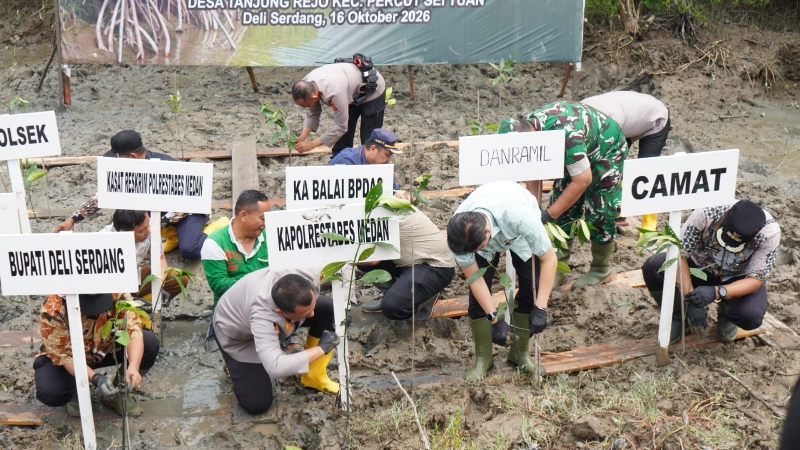
DELI SERDANG | INDATANEWS.COM - The Deli Serdang Regency Government is stepping up efforts to protect coastal ecosystems. A total of 1,994 mangrove seedlings were planted on Thursday, 16 October 2026, in Tanjung Rejo Village, Percut Sei Tuan Sub-district. The initiative aims to prevent coastal erosion, preserve wildlife habitats and strengthen disaster risk reduction in coastal areas.
Zainal Abidin Hutagalung, Assistant for Government Affairs and Public Welfare at the Deli Serdang Regency Government, expressed his support for the initiative during a Green Policing activity. The event was organised by Medan City Police in collaboration with members of the Indonesian National Armed Forces (TNI), the Indonesian National Police (Polri), coastal residents, environmental groups and other stakeholders.The mangrove planting initiative is intended not only to restore ecosystems but also to encourage different stakeholders to share responsibility for long-term environmental protection. Coastal areas that are particularly vulnerable to erosion require joint conservation measures to preserve their ecological functions and protect inland communities from environmental damage.
Zainal Abidin praised the police for initiating the greening campaign. He stressed that the Deli Serdang Regency Government supported various environmental protection programmes, particularly those that would deliver long-term benefits to the public and future generations."The Deli Serdang Regency Government fully supports programmes carried out by the police, particularly initiatives to protect the environment for the benefit of future generations," he said.
According to Zainal Abidin, planting mangrove seedlings alone would not be sufficient. All parties involved must also ensure that the plants receive continuous care and monitoring so they can grow healthily and become established over the long term.He called on the regional administration, security forces, local communities and environmental groups to strengthen their cooperation in protecting coastal areas. Such collaboration, he said, was an important step towards ensuring that the ecological benefits of mangroves would be sustained for years to come.
Medan Police Chief Jean Calvijn Simanjuntak explained that the mangrove planting activity formed part of the Green Policing programme. The initiative aims to encourage the police to involve local communities in environmental protection while helping to reduce disaster risks.
Jean Calvijn said the role of the police extended beyond maintaining security and public order. The force could also promote environmental conservation to help keep public spaces safe and protect the livelihoods of local communities over the long term."The police and the public are working together not only to maintain security and public order but also to protect public spaces. This includes, in particular, preserving the natural environment," he said.
The Green Policing approach creates opportunities for closer cooperation between security forces and communities in addressing environmental problems that directly affect people's lives. The mangrove planting activity is a practical example of joint action to protect coastal areas.Community participation is also essential to sustaining the programme after the planting activity has ended. Caring for the seedlings, monitoring their growth and protecting the site from damage are crucial to ensuring that the greening initiative achieves its intended impact.

Around 250 people from various sectors took part in the event. The presence of security personnel, regional government representatives, coastal residents, environmental groups and other stakeholders highlighted the importance of collective action in protecting coastal areas.
Mangroves perform vital ecological functions in coastal regions. Their root systems help trap sediment and reduce wave energy, potentially lowering the risk of coastal erosion. In certain areas, mangrove vegetation can also limit the inland penetration of seawater. However, the effectiveness of this protection depends on local environmental conditions and the characteristics of the coastline.In addition to protecting coastlines, mangroves absorb carbon dioxide and store carbon. They also provide habitats and food sources for numerous animal species. Mangrove ecosystems therefore play a significant role in maintaining ecological balance, particularly in areas with high biodiversity.
The mangrove planting initiative in Tanjung Rejo consequently benefits not only the local environment but also broader efforts to address climate change and conserve coastal ecosystems.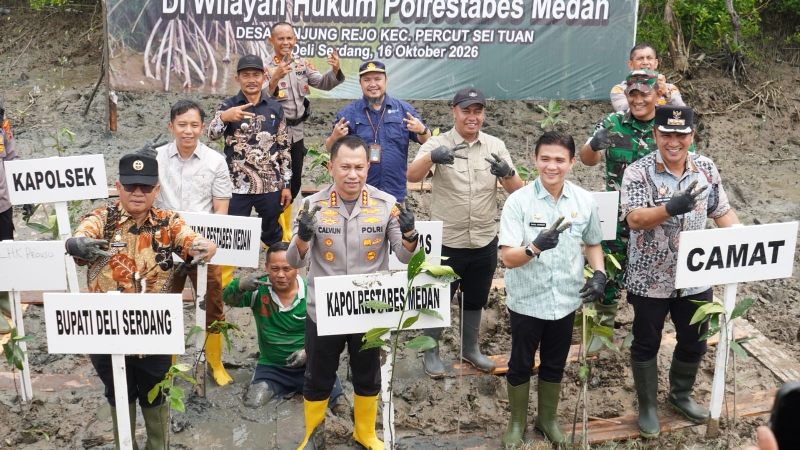
The coastal area of Tanjung Rejo is also considered one of the routes used by migratory birds travelling from Siberia. This highlights the importance of protecting mangrove areas, as coastal vegetation helps provide wildlife with habitats and food sources.
The destruction of coastal ecosystems can degrade natural habitats, disrupt food chains and place additional pressure on biodiversity. Responsible management and consistent protection of these areas, by contrast, can help preserve their ecological functions and support the survival of wildlife.Conservation efforts in Tanjung Rejo require long-term programmes and active community involvement. Following the planting of the seedlings, measures must include monitoring survival rates, providing regular maintenance and protecting the site against damage. These steps are essential to ensuring that the mangroves grow healthily and fulfil their ecological functions as effectively as possible.
The Deli Serdang Regency Government is expected to strengthen cooperation with the police, the Indonesian National Armed Forces, coastal residents and environmental groups to protect the area. Cross-sector collaboration is an important factor in reducing the risk of coastal damage and securing long-term ecological benefits for the community.Through the Green Policing programme, the planting of 1,994 mangrove seedlings in Tanjung Rejo Village is intended to become a sustainable initiative that protects coastal ecosystems, reduces the risk of coastal erosion and preserves biodiversity across Deli Serdang Regency. (IDNC)
REPORTER: Edi Saputra | EDITOR: Fik Sagala