Friday, 23 October 2026
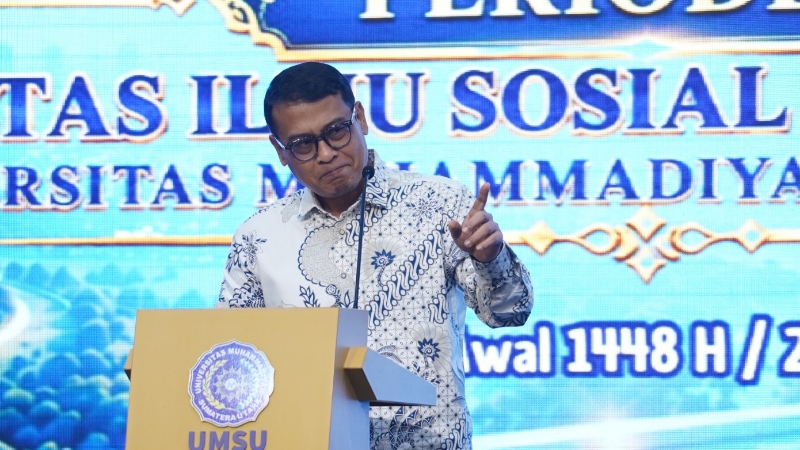
MEDAN | INDATANEWS.COM - Dr Rudianto, Vice-Rector for Research, Innovation, Community Engagement and Internationalisation at the Muhammadiyah University of North Sumatra (UMSU), has urged graduates of its Faculty of Social and Political Sciences (FISIP) to continually develop their skills and competencies to keep pace with the rapid advancement of artificial intelligence (AI). He warned that technological disruption would bring profound changes to the world of work, requiring graduates to prepare themselves for new professional demands.
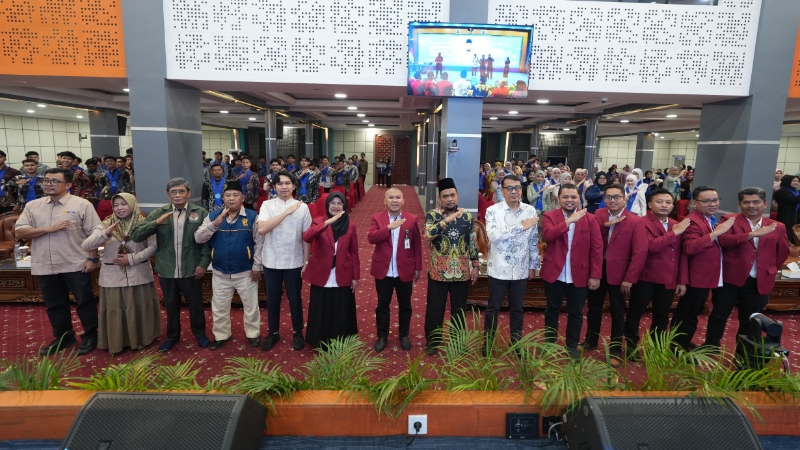
He delivered the message during an academic graduation ceremony for 186 FISIP UMSU graduates from three study programmes: Social Welfare, Public Administration and Communication Studies. Representing the university's leadership, Rudianto expressed his pride and appreciation for the graduates' achievements.He also reminded them not to overlook the sacrifices made by their parents and families, who had supported them throughout their approximately four years of study.
"First and perhaps most importantly, we must thank our parents and families. They have worked hard and made considerable sacrifices to finance their children's studies during their approximately four years at UMSU," Rudianto said.He stressed that a university qualification reflected not only students' own dedication but also the commitment and support of their families. Graduates should therefore use their academic achievements as a foundation for the next stage of their lives and build a better future through continued personal and professional development.
Rudianto urged the graduates to view the completion of their studies not as an end in itself, but as the beginning of a new chapter. The official graduation ceremony is scheduled for Tuesday, 27 October 2026. After leaving university, they will face important decisions, whether to enter the workforce, pursue further education or establish their own businesses.
Some graduates may already have clear plans, having gained work experience, completed internships, developed professional portfolios or prepared to become entrepreneurs. Others may need to assess their existing qualifications and identify gaps in their practical experience before competing for employment.A university degree alone is no longer enough to guarantee a job. Employers increasingly expect candidates to demonstrate practical skills, relevant professional competencies, adaptability and a willingness to learn as industries evolve.
"Generation Z is now facing a civilisation and technological progress that are developing extraordinarily rapidly. The way people live, earn a living and conduct economic activities over the next five years will be fundamentally different from the situation five years ago," he explained.These changes require graduates to understand technological developments and recognise the skills that employers and society will need in the years ahead. Academic knowledge must be combined with practical application, enabling graduates to contribute to solving real-world problems.
For those graduating in social and political sciences, this means understanding social change, developing effective communication strategies, formulating public policies and responding to the needs of communities. These capabilities can become even more valuable when combined with digital literacy, analytical thinking and the ability to adapt to changing circumstances.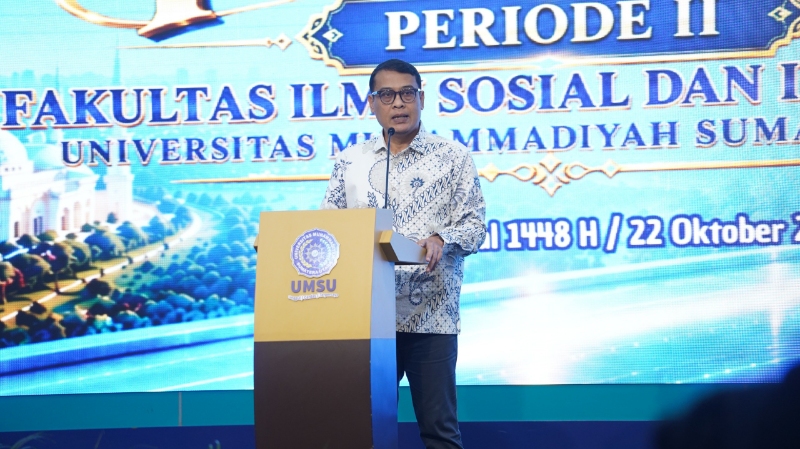
Rudianto also highlighted the concept of the useless class, referring to groups of people who risk losing their economic relevance because their skills and competencies no longer meet the demands of the labour market.
"Why do we speak of a social class that is no longer needed? Because its skills and competencies no longer match the current requirements of industry," he emphasised.Automation and artificial intelligence are transforming business operations and employment patterns. As companies adopt new technologies, some previously sought-after skills may lose their value, while demand for emerging competencies continues to grow. Those who fail to adapt risk being left behind professionally.
The consequences could extend beyond a loss of income. Difficulty securing productive employment may undermine people's financial independence and bargaining power, while potentially limiting their ability to participate fully in social and political life.Rudianto noted that economic strength and productivity were closely linked to people's ability to contribute to their country's development. Graduates therefore needed to cultivate competencies that would allow them to remain productive, independent and socially engaged despite changing economic conditions.
His message was clear: an academic qualification does not automatically secure employment or guarantee long-term professional relevance. Graduates must demonstrate their actual capabilities, understand the expectations of prospective employers and develop a distinctive professional profile that sets them apart from other candidates.Nevertheless, artificial intelligence should not be viewed solely as a threat. Those who learn to use the technology effectively can improve productivity, develop businesses, expand the reach of their services and create new employment opportunities.
Awareness of technological developments must be accompanied by practical efforts to strengthen individual capabilities. Graduates can pursue further training, build professional portfolios, learn to use digital tools, gain additional work experience and develop entrepreneurial skills relevant to their respective fields.
He also emphasised that learning must not end with the completion of a bachelor's degree. Knowledge acquired at university needs to be continually updated to keep pace with advances in science and technology and the changing needs of society."Never stop learning, and continually improve your skills and competencies. It is entirely possible that the knowledge you acquired during your four years of study will change fundamentally over the next four years. My message, therefore, is this: keep updating and expanding your skills, even after you have earned an academic qualification," he said in closing.
For the 186 FISIP UMSU graduates, the ceremony marks more than the completion of their university studies. It also provides an opportunity to assess their readiness for the next stage of their lives, plan their careers and consider how they can contribute to society.As artificial intelligence increasingly influences economic and social activities, adaptability, critical thinking, communication skills and continuous learning are becoming essential for young professionals. By regularly updating their competencies and learning to use emerging technologies effectively, graduates can strengthen their position in the labour market, seize new opportunities and maintain their professional relevance in an ever-changing world of work. (IDNC)
REPORTER: H. Muhammad Said Harahap | EDITOR: Fik Sagala