Sunday, 01 November 2026
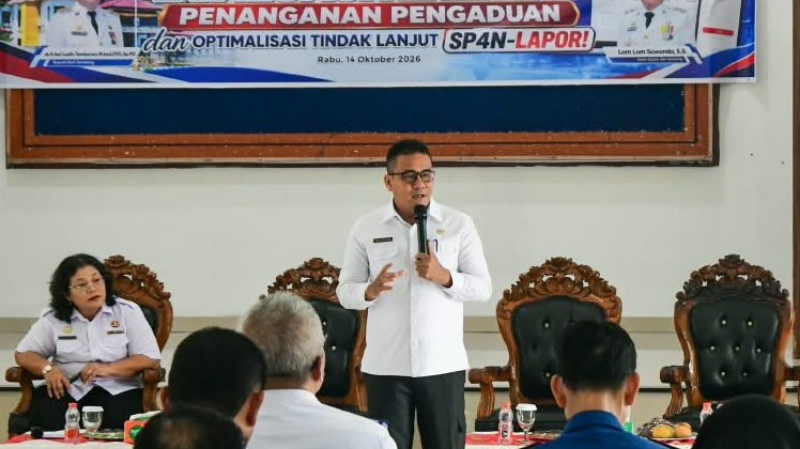
DELI SERDANG | INDATANEWS.COM - The Deli Serdang Regency Administration is strengthening coordination between relevant agencies to speed up the handling of public complaints submitted through the National Public Service Complaints Management System (SP4N-LAPOR!). The initiative forms part of broader efforts to improve the quality of public services, clarify the responsibilities of individual agencies and ensure that residents receive reliable information about the progress of their complaints.
The commitment was highlighted at a coordination meeting on public complaint management, which opened on Wednesday, 14 October 2026, at the Cadika Pramuka Hall in Lubuk Pakam. The meeting was officially opened on behalf of Deli Serdang Regent Asri Ludin Tambunan by Hendra Wijaya, Assistant for Economic and Development Affairs at the Deli Serdang Regency Secretariat.
In his address, Hendra emphasised that the regional administration must regard public complaints as a basis for evaluating and improving public services rather than as an administrative burden. All agencies, he said, were obliged to handle reports promptly, accurately, transparently and accountably, ensuring that problems raised by residents were not left unresolved unnecessarily.
"Public complaints are not a burden, but an opportunity to improve services. No one should pass the responsibility to another party when a report requires action from several agencies. Coordination must take place immediately so that residents can be certain their concerns are being addressed," he stressed.
Hendra urged all agencies to improve administrators' discipline in monitoring incoming reports. He also underlined the need for cooperation across agencies and continuous monitoring of complaints that had yet to be resolved.
In his view, simply receiving and registering complaints was not enough. Each agency had to ensure that reports reached the appropriate authorities, received proper follow-up and gave residents a clear understanding of the steps being taken.
Sandra Dewi Situmorang, head of the Deli Serdang Office of Communication, Informatics, Statistics and Encryption, explained that the central SP4N-LAPOR! system recorded 228 public complaints in 2025. The administration had taken follow-up action on 190 reports, while a further 38 complaints remained under consideration.
The figures indicate that most complaints received had already been addressed through follow-up action. However, the regional administration must continue to monitor outstanding cases consistently to ensure that neither their status nor the steps required to resolve them remain unclear.
The average time taken to verify a report was 1.8 days, while subsequent processing took an average of 3.7 days. These figures serve as important indicators for assessing how quickly the administration responds to concerns, complaints and problems relating to public services.
However, prompt verification and follow-up must be accompanied by high-quality solutions. The administration must not only ensure that reports are processed within a reasonable timeframe but also guarantee that every complaint receives a clear response and is handled in accordance with the responsibilities of the relevant agency.
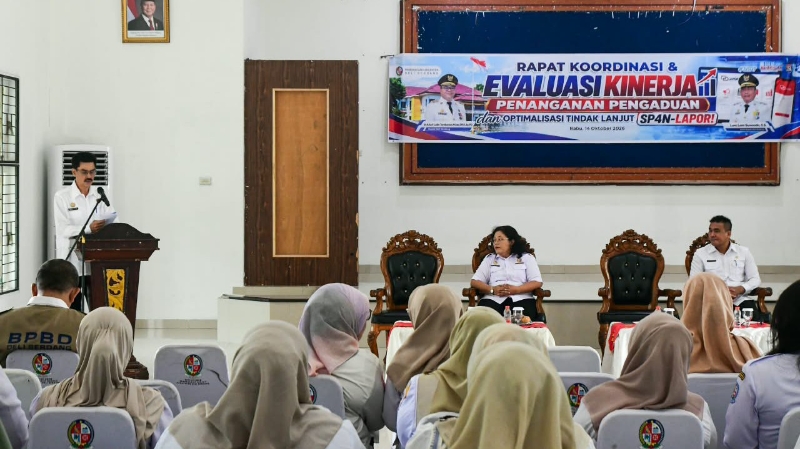
Sandra explained that the coordination meeting aimed to strengthen the professional capabilities of administrators and liaison officers, accelerate complaint handling and improve cooperation between agencies in resolving residents' concerns.
"Through this coordination meeting, we aim to improve the capabilities of administrators and liaison officers so that every public complaint can be reviewed and followed up without delay. Equally important is evaluating cases that are still being processed to ensure that residents know the status of the complaints they have submitted," she said.
Improving the skills of staff responsible for handling complaints is an essential part of building a responsive complaints management system. Administrators must understand the procedures for receiving, verifying, referring, monitoring and resolving reports. Liaison officers, meanwhile, must ensure that coordination with the relevant agencies operates effectively.
Regular evaluations can also help the administration identify obstacles that delay the resolution of cases. Once the causes of delays are understood, agencies can introduce appropriate improvements, clarify responsibilities and prevent similar problems from recurring.
Consistent complaint management can strengthen public confidence in the administration. Residents need an accessible channel through which to raise their concerns. At the same time, they must be able to trust that every report will be taken seriously and handled appropriately.
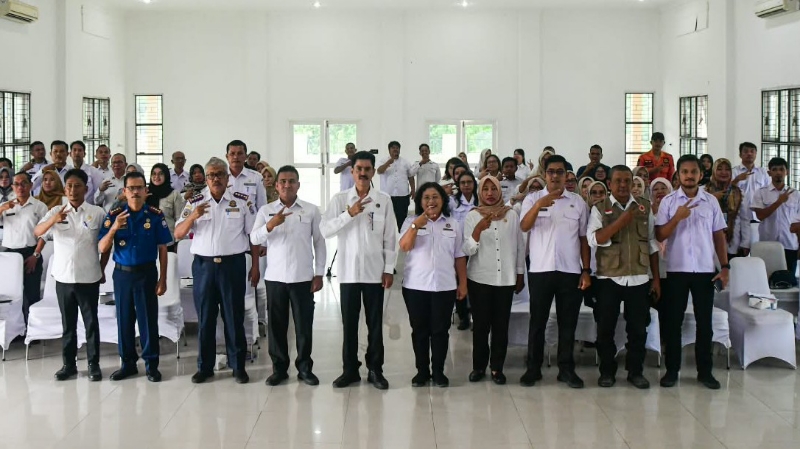
Exan Free Coco Rajagukguk, a representative of the North Sumatra Provincial Office of Communication and Informatics, said public complaints served as a tool for evaluating public services. They helped identify existing problems while also encouraging innovation in the delivery of better government services.
"Public complaints do not merely highlight problems with public services; they also provide the government with important input for evaluation and improvement. Every report must therefore receive a clear response, be referred to the appropriate authority and remain under monitoring until concrete follow-up action is ensured," he said.
Exan emphasised that administrators and liaison officers must carry out their duties proactively and work closely with subdistrict, village and urban ward administrations. This cooperation would help ensure that every complaint was received, referred to the responsible agency and monitored until it was resolved.
Involving local administrations is also important because public service problems often arise directly from residents' day-to-day experiences. Effective coordination can speed up the exchange of information, make it easier to identify the responsible authorities and reduce the risk of complaints being left unattended because of poor communication.
For the Deli Serdang Regency Administration, strengthening SP4N-LAPOR! is about more than improving administrative performance. The system also provides an opportunity to better understand residents' needs, improve administrative procedures and promote more open governance.
The regional administration must ensure that residents receive regular updates on the progress of their complaints. Keeping people informed is an essential element of transparent and accountable public services, particularly when resolving a problem requires cooperation between several agencies.
By strengthening staff capabilities, improving monitoring and establishing clearer coordination between agencies, the Deli Serdang Regency Administration aims to accelerate complaint handling and make lasting use of public feedback as a basis for improving public services.
Ultimately, the success of complaint management should not be measured solely by the number of reports received or the speed at which they are verified. What matters most is whether reliable follow-up action is taken and whether the resulting solutions make a tangible difference to residents. The 38 outstanding complaints therefore remain an important part of the administration's ongoing evaluation, ensuring that no concern is overlooked. (IDNC)
REPORTER: Edi Saputra | EDITOR: Fik Sagala