Tuesday, 27 October 2026
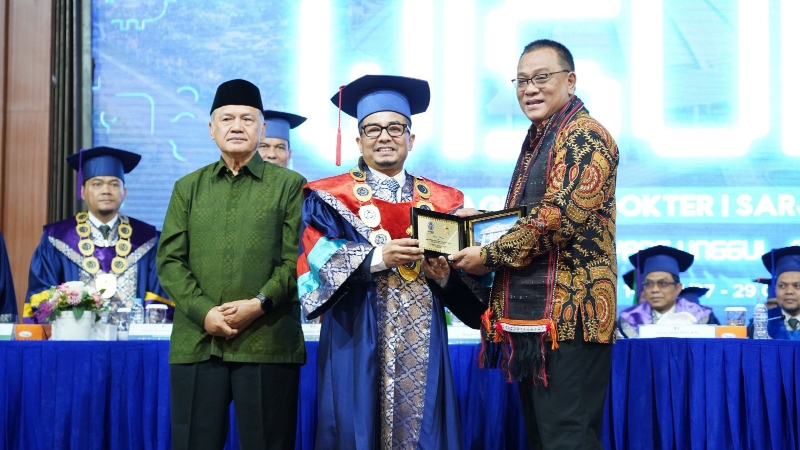
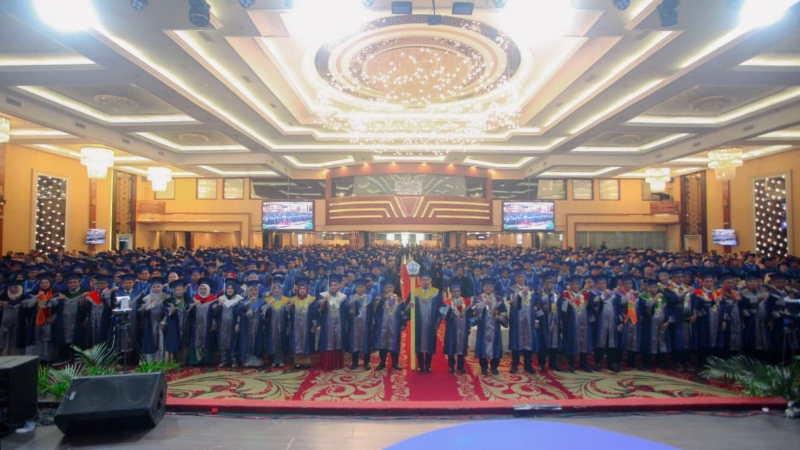
MEDAN | INDATANEWS.COM - The Muhammadiyah University of North Sumatra (UMSU) has graduated a total of 2,657 students at its second graduation ceremony of 2026. The three-day event runs from Tuesday to Thursday, 27–29 October 2026, at the UMSU campus at Jalan Listrik No. 2, Petisah Tengah, in Medan Petisah District, Medan, North Sumatra.
On the first day, Tuesday, 27 October 2026, a total of 943 graduates took part in the ceremony. Guests included the Chairman of Muhammadiyah's Central Executive Board, Prof. Dr H. Dadang Kahmad, M.Si.; Environment Minister Mohammad Jumhur Hidayat; the Head of Higher Education Services for Region I, North Sumatra, Prof. Dr Saiful Anwar Matondang, M.A., Ph.D.; TVMu Director Dr Makroen Sanjaya; representatives of Muhammadiyah and 'Aisyiyah leadership bodies in North Sumatra; university senate members; and members of the UMSU academic community.The graduation ceremony marks more than an academic achievement for the graduates. It also provides an opportunity to highlight the responsibility of higher education institutions to develop people of integrity who can adapt to advances in science and technology and make tangible contributions to society. The graduates were also encouraged to embrace lifelong learning, entrepreneurial thinking, social engagement and a commitment to environmental protection.
UMSU Rector Prof. Dr Akrim, M.Pd., stressed that graduation was far more than an academic ceremony. Completing a degree represented the culmination of a long journey shaped by hard work, prayers and sacrifices made by students and their families.
He urged graduates not to focus solely on finding jobs, securing positions or achieving personal success. Instead, they should use the knowledge and skills acquired during their studies to address social problems and bring about positive change.Akrim explained that graduates could contribute to society in different ways, depending on their respective fields of study. Graduates of the Faculty of Teacher Training and Education, for example, were expected to help shape young people's character and improve educational standards. Meanwhile, graduates of the Faculty of Social and Political Sciences should promote responsible public communication and support policy decisions that serve the interests of the people.
The university also expects graduates of its master's and doctoral programmes to strengthen research, drive innovation and develop scientific knowledge to address increasingly complex challenges. Equipped with these capabilities, UMSU alumni can advance social development through their professional careers, entrepreneurial ventures, research activities or community initiatives.The rector further explained that UMSU bases its educational mission on the Tri Dharma Perguruan Tinggi, the three fundamental responsibilities of higher education institutions, and the Catur Dharma Perguruan Tinggi Muhammadiyah, the four pillars of Muhammadiyah higher education. Through this framework, the university integrates teaching, research, community service and Islamic values to help shape students' character.
On the occasion, Akrim also outlined the university's institutional achievements. According to him, UMSU remains among the five leading Muhammadiyah and 'Aisyiyah higher education institutions in Indonesia, out of a total of 165 institutions. He added that UMSU has 29,617 students, making it the largest private higher education institution on the island of Sumatra.To further improve educational quality, UMSU continues to develop its campus infrastructure. Planned projects include a building of up to ten storeys for the Faculty of Medicine and Health Sciences. The facility is intended to support teaching and learning while contributing to the further development of UMSU's teaching hospital.
Campus expansion forms part of the university's efforts to prepare graduates for labour market demands, technological change and social challenges. Higher education institutions should not simply produce people with degree certificates; they must also equip graduates with professional skills, strong character and the ability to adapt.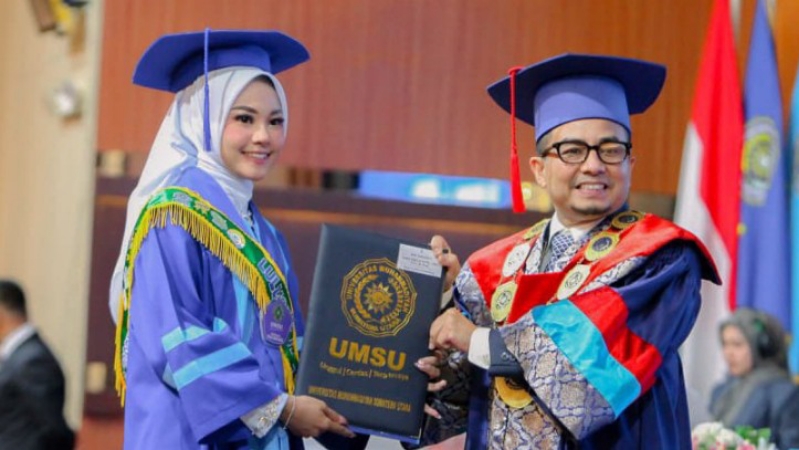
Prof. Dr H. Dadang Kahmad, M.Si., who oversees publications, information technology and digitalisation within Muhammadiyah's Central Executive Board, reminded graduates that advances in science and technology required them to keep learning, adapt and pursue innovation. At the same time, he stressed that the development of professional competence must go hand in hand with stronger moral values and ethical principles.
Dadang delivered three key messages to the graduates. First, they should regard themselves as lifelong learners, continually updating their knowledge and developing their abilities. Second, they must uphold integrity and exemplary conduct in both their personal and professional lives. Third, they should use their knowledge and expertise to deliver tangible benefits to society."In professional life, competence opens up new opportunities, but integrity determines whether trust can be sustained," he said.
The message highlights that graduates' success depends on more than academic ability or professional achievements. Honesty, accountability, discipline and consistent adherence to ethical principles are also crucial in determining the level of trust they earn in their respective professions.Dadang explicitly warned alumni against involvement in corruption or abuse of authority. He expressed hope that UMSU graduates would carry strong moral values into the workplace, whether they joined companies, established their own businesses, assumed public responsibilities or engaged in community activities.
He also encouraged graduates to continue developing their abilities in response to rapid change. Learning, he said, must not end when students leave the lecture hall but should become a lifelong habit. Only then can alumni keep pace with developments in their professional fields and respond effectively to emerging challenges.The values of Al-Islam and Kemuhammadiyahan—Islamic teachings and the principles specific to Muhammadiyah—form an important part of character development at UMSU. These values are taught, among other ways, through the Baitul Arqam Mahasiswa programme at the beginning of students' studies and Baitul Arqam Purna Studi towards the end of their education. Through these programmes, the university seeks to encourage students to combine academic competence with social responsibility, moral integrity and community engagement.
"Congratulations on completing your studies. This is the first stage. Now is the time to serve society and the nation and make a difference. We must work hard and achieve a great deal. I am convinced that UMSU is already making a contribution to society," he said.
According to Jumhur, universities play a strategically important role in promoting social and environmental change. They should not merely serve as centres of learning but should also deliver tangible benefits to society by fulfilling their three fundamental higher education responsibilities.He called on the academic community to join a movement for ecological renewal. Universities have the capacity to disseminate knowledge, raise public awareness, advance research and mobilise people to protect the natural environment.
"Universities must be part of a movement for ecological transformation because they are not individuals acting alone; they disseminate the principles of the three pillars of higher education. And I am sure UMSU has already understood this," he said.In discussing the younger generation and Muhammadiyah, Jumhur described a development pathway from the values of Surah Al-Ma'un to stronger social empowerment, from cadre development to social leadership, from voluntary service to systemic change, and from concern for the environment to ecological justice.
These ideas align with the teaching of Islamic and Muhammadiyah values at UMSU. The university offers Baitul Arqam Mahasiswa at the beginning of students' studies and Baitul Arqam Purna Studi before graduation. The programmes are intended to strengthen the understanding that scientific knowledge must be accompanied by social responsibility and environmental protection.Jumhur also highlighted the potential of Indonesia's natural resources and biodiversity to support various ecological restoration initiatives. However, he stressed that the use of these resources must comply with applicable regulations, be based on appropriate measurements and assessments, and ensure that the benefits are distributed fairly among the population.
In his view, environmental protection cannot rely solely on natural resources. It also requires responsible management, the involvement of various stakeholders and long-term commitment to ensure that positive outcomes are sustained.On the occasion, Jumhur also discussed the development of UMSU Garden on the site of the 49th Muhammadiyah Congress in Sampali Village, North Sumatra. He sees the area as having potential to support biodiversity conservation, which has become one of the world's major challenges.
"In the future, UMSU Garden can play a role in promoting biodiversity. We must ensure that biodiversity is preserved and work tirelessly to help even species threatened with extinction continue to thrive," he said.The development of green spaces and the protection of biodiversity can represent an important contribution by universities to environmental sustainability. Through teaching, research and community engagement, universities can improve public understanding of the importance of healthy ecosystems and help protect endangered species.
Meanwhile, the Head of Higher Education Services for Region I, North Sumatra, Prof. Dr Saiful Anwar Matondang, M.A., Ph.D., delivered three messages to the graduates: maintain social and interpersonal relationships, continue learning throughout life, and always show respect to their parents.He emphasised that graduating from university did not mark the end of the learning process. Alumni must keep their knowledge up to date and develop their abilities through various sources, including books, the internet and the experiences of others.
These messages reinforced the advice delivered by the university leadership and other speakers at UMSU's second graduation ceremony of 2026. Beyond celebrating their academic achievements, the graduates were encouraged to carry integrity, a willingness to learn and a sense of social responsibility into the next stage of their lives.Through their knowledge, character and awareness of environmental protection, UMSU alumni are expected to contribute to social development and help shape solutions to challenges at local, national and global levels. (IDNC)
REPORTER: H. Muhammad Said Harahap | EDITOR: Fik Sagala