Tuesday, 27 October 2026
MEDAN | INDATANEWS.COM - Miftahussakdan, a public health student at the University of North Sumatra (USU), is contributing to the development of alternative methods for controlling Aedes aegypti mosquito larvae. The research examines natural materials, including castor seeds and red chillies. The initiative aims to explore the potential of readily available materials to support efforts to prevent dengue fever.
The research originated from a study by USU lecturers Ir. Indra Chahaya S., M.Si., and Winni R. E. Tumanggor, SKM., MPH., into larvicides derived from castor seed extract. Sakdan participated in the research before developing another potential material for community-based public health activities: red chillies, which are more readily available to the public.Dengue fever remains a public health challenge across many tropical regions. The disease is transmitted through the bites of infected mosquitoes, particularly Aedes aegypti. Controlling mosquitoes during their larval stage is therefore an important measure in efforts to reduce the risk of transmission. Natural materials may provide a subject for further research and open up additional possibilities for larval control. However, their effectiveness and safety must be established through appropriate scientific studies.
According to Sakdan, the lecturers initially used castor seed extract because castor plants were widely available in Medan at the time. As these trees have become increasingly difficult to find, the team developed an alternative material that would be easier to obtain and use in practice.
"Initially, my lecturers' research focused on castor seed extract because castor seeds were plentiful in Medan at the time. However, as castor trees have become increasingly difficult to find, we developed an alternative using red chillies so that people could more easily try it themselves at home," Sakdan said on Tuesday, 27 October 2026.The change highlights the importance of material availability when developing innovations for communities. Easily obtainable resources can help people become more familiar with a method under investigation. However, the fact that a material is readily available does not in itself demonstrate that it is effective as a larvicide.
Red chillies are being investigated as a potential material for developing alternative methods of mosquito larval control. During community-based activities, the team introduced this approach while also observing changes throughout the study. The project therefore combines research with public health education on the importance of controlling mosquito larvae.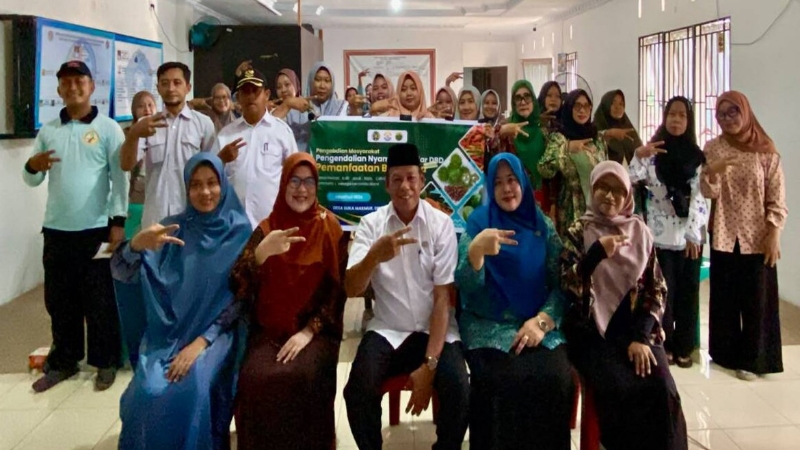
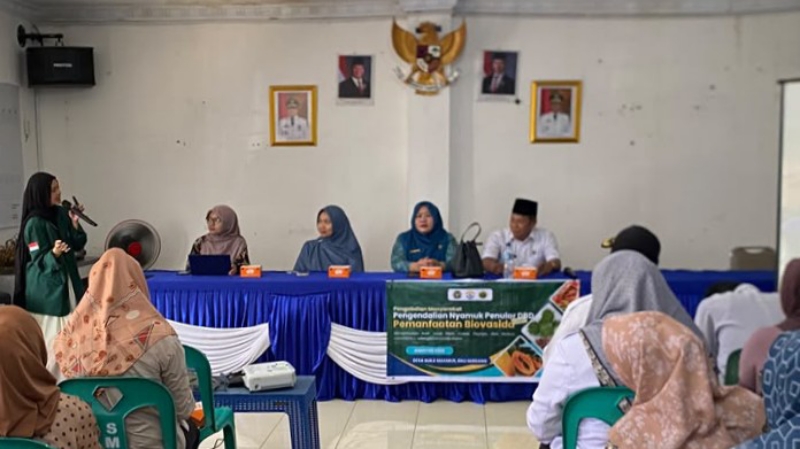
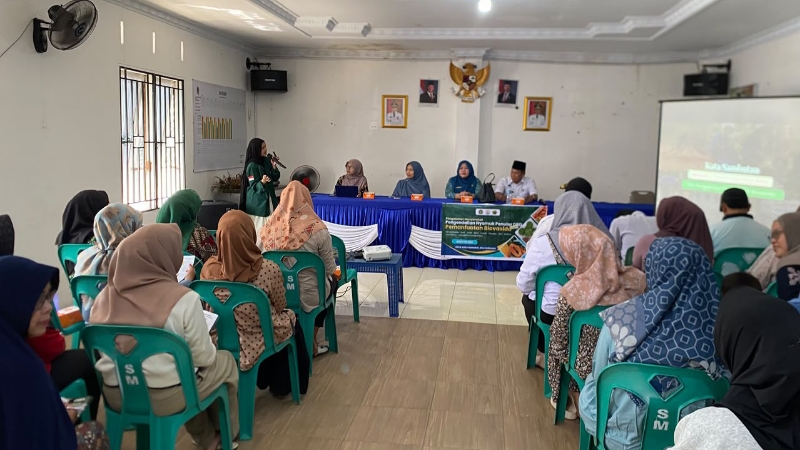
The team also tested its approach as part of a community-based public health initiative in Delitua District, Deli Serdang Regency. Women from the Family Welfare Movement (PKK, Pemberdayaan Kesejahteraan Keluarga) took part in a two-week observation period.
The study used ovitraps, devices designed to detect or collect mosquito eggs. The team used recycled containers with black tape applied to their outer surfaces to encourage mosquitoes to lay eggs. The containers were then used in the investigation of the red-chilli-based larvicide, following the research method employed by the team.Regular inspections were an important part of the study, enabling the team to monitor the condition of the traps and record the presence of larvae throughout the observation period. Community participation also gave residents an opportunity to learn about a method currently being investigated for mosquito control.
"During regular inspections over a two-week period, we observed changes in the presence of larvae in the containers used for trapping," Sakdan reported.These observations form part of the team's research and community engagement activities. However, changes in the number or presence of larvae in the traps are not sufficient to demonstrate that red chillies effectively kill mosquito larvae. A reliable assessment of larvicidal activity requires measurable data, appropriate control groups, repeated trials and a research method capable of determining whether the observed changes can genuinely be attributed to the treatment used.
In the case of red chillies, the properties of the material may change during storage or application. Further research is therefore needed to determine how long the material retains its properties and whether the results remain consistent under comparable conditions. The inspection and replacement of containers should also follow a defined research protocol to ensure that observations can be compared reliably.
Furthermore, ovitraps are primarily designed to monitor or collect mosquito eggs. Their use alone does not demonstrate that a substance placed inside them can effectively control mosquito populations across a wider area. To establish the actual benefits, research must distinguish between observations made inside individual containers and any effects on larval numbers or mosquito populations in the surrounding environment.Such investigations are important to ensure that the public receives reliable information before a new development is adopted as a vector-control method. If further studies produce consistent results, red chillies could be investigated more extensively as a potential alternative material for larvicide development.
In the meantime, the public should continue following dengue prevention measures recommended by health professionals. These include regularly emptying and cleaning water containers, covering water storage facilities, reusing or recycling discarded items that may collect water, and routinely checking the surroundings of homes. These measures help reduce potential mosquito breeding sites and do not need to wait for the results of research into new larvicides.The collaboration between students, lecturers and community members in investigating castor seeds and red chillies offers new opportunities for further research into the use of locally available materials to control mosquito larvae. However, the innovation requires further scientific evidence before its effectiveness, safety and practical application can be reliably assessed. (IDNC)
REPORTER: Ahmad Zulfikar | EDITOR: Fik Sagala