Friday, 30 October 2026
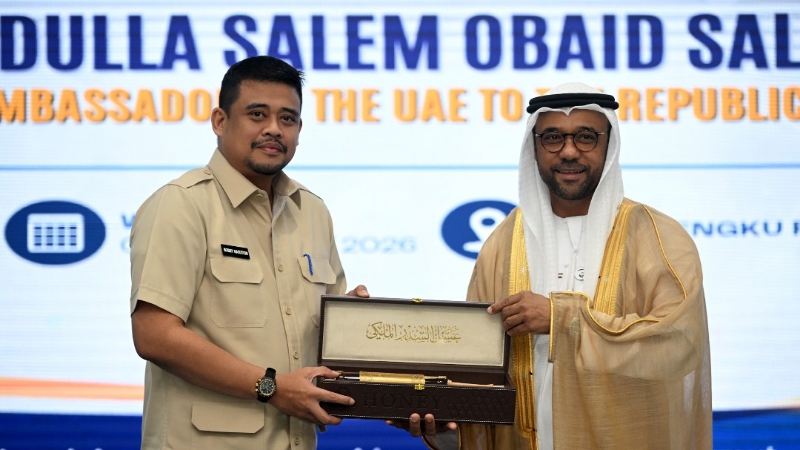
MEDAN | INDATANEWS.COM - North Sumatra Governor Muhammad Bobby Afif Nasution has offered the United Arab Emirates (UAE) a range of investment opportunities and strategic partnerships to accelerate regional development. The proposed cooperation covers education, port development, the semiconductor industry, infrastructure, agriculture, food security and healthcare.
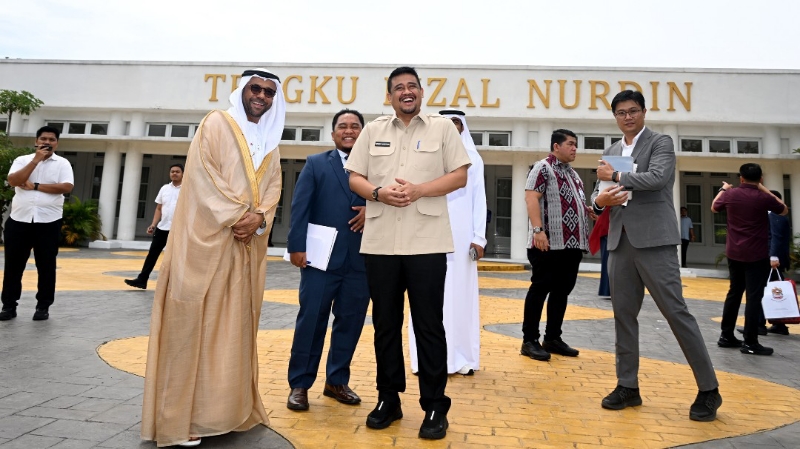
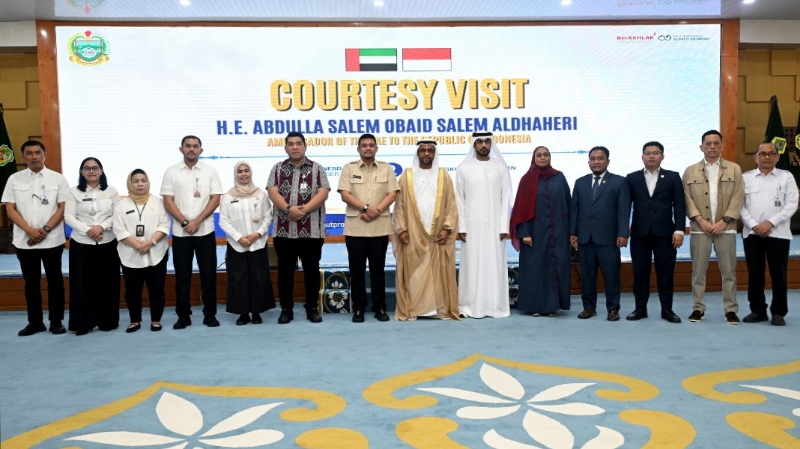
Bobby put forward the proposals during a meeting with the UAE Ambassador to the Republic of Indonesia, Abdulla Salem Aldhaheri, on Wednesday, 28 October 2026, at the Tengku Rizal Nurdin Hall at the North Sumatra Governor's Residence on Jalan Sudirman in Medan.The meeting provided North Sumatra with an opportunity to expand its international partnerships, particularly with a country that has substantial investment capacity and experience in infrastructure and industrial development. The North Sumatra Provincial Government hopes the discussions will lead to concrete cooperation programmes that benefit the regional economy and local communities.
Bobby said the North Sumatra Provincial Government remained committed to achieving more balanced regional development and improving educational standards. Its initiatives include expanding specialist school programmes designed to produce skilled workers and prepare students for labour market demands.
He expressed hope that selected general and vocational secondary schools in North Sumatra could establish direct partnerships with educational institutions in the UAE. The proposed cooperation could include adapting curricula, providing students with knowledge about the UAE and developing professional skills that meet the needs of industries in Indonesia and the Arab region."We hope that one of the selected SMA or SMK schools in North Sumatra can work directly with the UAE. The cooperation could include curriculum adaptation, providing knowledge about the UAE and preparing skilled workers to meet the needs of industries in Indonesia and the Arab region," Bobby said.
This approach could enable both sides to establish closer links between education and industrial requirements. Through targeted partnerships, selected schools in North Sumatra could broaden their international outlook, make their training programmes more relevant to employment and better prepare graduates to compete in regional labour markets.For North Sumatra, strengthening vocational education is also important in view of its planned industrial development. An adequate supply of skilled workers is a key factor in attracting investment while ensuring that local communities benefit from economic growth.
According to Bobby, this geographical advantage creates investment opportunities not only in port infrastructure but also in a wide range of economic activities that support the smooth movement of goods and trade. Integrated port development could improve North Sumatra's connections with international markets.
This prospect aligns with efforts to strengthen the competitiveness of the regional economy. More efficient port infrastructure could facilitate the transport of agricultural produce, support exports and imports, and create new business opportunities in logistics and related industries.However, turning these opportunities into reality will require further discussions to determine suitable investment arrangements, specific development needs and areas of mutual interest. The North Sumatra Provincial Government hopes its engagement with the UAE will lead to more detailed assessments of potential projects.
Developing a semiconductor industry requires appropriately trained personnel, suitable infrastructure and an industrial ecosystem capable of supporting sustainable production. Bobby therefore emphasised the importance of developing workforce skills alongside the requirements of the planned industry.
Potential cooperation with the UAE could form part of the further assessment of this initiative. However, both sides still need to determine the most suitable form of partnership, including how industrial investment could be linked to vocational training and educational development.In addition to semiconductors, Bobby identified other development priorities in North Sumatra that could offer opportunities for cooperation. These include infrastructure expansion, stronger agriculture and food security, improved educational standards, healthcare development and the development of new areas.
Bobby said these sectors required support and partnerships capable of delivering tangible results for the region. He hoped discussions with the UAE would go beyond an exchange of ideas and lead to programmes with clear objectives and measurable implementation steps."We very much hope that we can work together to advance these developments through more concrete cooperation in the future," Bobby said.
His remarks underline the North Sumatra Provincial Government's expectations of a more productive economic relationship with international partners. The regional administration aims to create new opportunities for cooperation that support the province's development while expanding economic opportunities for its people.UAE Proposes Three Priority Areas for Cooperation
The UAE Ambassador to Indonesia, Abdulla Salem Aldhaheri, welcomed the cooperation opportunities outlined by Bobby. He said his side would examine in greater detail the various sectors that could offer potential for partnerships with North Sumatra.According to Abdulla, both sides should hold further discussions to identify the most strategically important and realistically achievable areas of cooperation. This step would help focus the talks on opportunities with tangible prospects for further development.
"To help us focus more effectively, I believe we should hold further joint discussions and agree on at least three particularly important priority areas," Abdulla said.The proposal represents an initial step towards narrowing down the opportunities already discussed. Identifying three priority areas would allow both sides to concentrate their discussions on sectors that match North Sumatra's development needs with the UAE's capacity for partnership.
Further discussions are also expected to clarify the scope of cooperation, plan follow-up measures and identify development opportunities that can be implemented gradually. Although no specific projects have been finalised, the talks so far provide a basis for a more targeted assessment of potential partnerships.For North Sumatra, the next challenge is to turn the investment opportunities on offer into programmes that strengthen the regional economy, improve workforce skills and expand access to markets. For the UAE, agreeing on shared priorities could help identify partnership opportunities that align with the province's development needs.
If both sides reach agreement on priority sectors and follow it up with careful planning, the initiative could deepen economic ties between North Sumatra and the UAE. Education, port connectivity and industrial development are among the areas that could now receive closer consideration. (IDNC)REPORTER: Ahmad Zulfikar | EDITOR: Fik Sagala