Friday, 23 October 2026
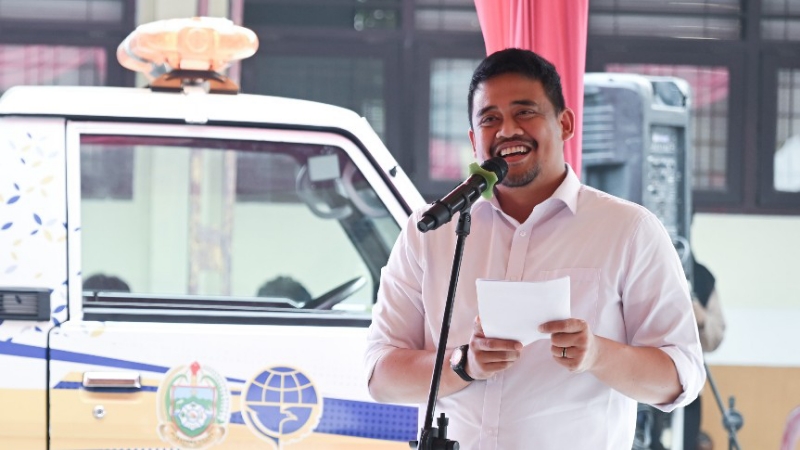
ASAHAN | INDATANEWS.COM - The North Sumatra Provincial Government has urged all regents and mayors to take preventive measures as smog drifts into the region. To protect pupils' health, Governor Bobby Nasution has instructed senior secondary schools, vocational schools and special-needs schools to introduce remote learning from Friday, 16 October 2026.
Governor Bobby Nasution announced the recommendation on Thursday, 15 October 2026, during the launch of a free feeder bus service for pupils at SMA Negeri 1 Pulau Rakyat, a state senior secondary school on Jalan Dusun II in Pulau Rakyat District, Asahan Regency.He explained that remote learning was a preventive measure designed to reduce the risk of health problems caused by smog exposure. Protecting pupils must remain the top priority, particularly when air quality poses a potential threat to public health.
"For senior secondary schools, vocational schools and special-needs schools, I expect remote learning to begin tomorrow. The children will continue learning from home and will not have a holiday, because we must protect them from exposure to smog," Bobby said.Bobby stressed that the measure did not mean schools were suspending educational activities. Pupils would still be required to attend lessons throughout the remote-learning period, but they would do so from home.
In addition to instructing schools to introduce remote learning, Bobby called on regency and municipal administrations to tailor preventive measures to local conditions. He urged officials to monitor air quality regularly and step up public awareness campaigns about the health risks associated with smog exposure.
Bobby also advised residents to minimise their exposure to smoke and smog wherever possible. This was particularly important for children and other vulnerable groups. Wearing masks was among the recommended protective measures to reduce exposure to airborne particles."We also expect all regents and mayors to continue monitoring developments in air quality closely. We urge the public to take health precautions as well, including wearing masks," he said.
In Bobby's view, tackling the smog problem requires both the attention of local authorities and active public participation. Air-quality monitoring is essential for determining appropriate preventive measures. These may include restricting or adjusting outdoor activities when air quality deteriorates.Local administrations must also ensure that residents receive clear and up-to-date information about changing smog conditions. This would help parents protect their children more effectively and enable schools to adjust their teaching arrangements in line with official recommendations and conditions in their respective areas.
Preventive measures are particularly important for groups most vulnerable to the effects of air pollution. Children need special protection during their daily activities and throughout their education. Remote learning therefore offers a way to avoid unnecessary journeys to school and time spent on school premises while the region remains affected by smog.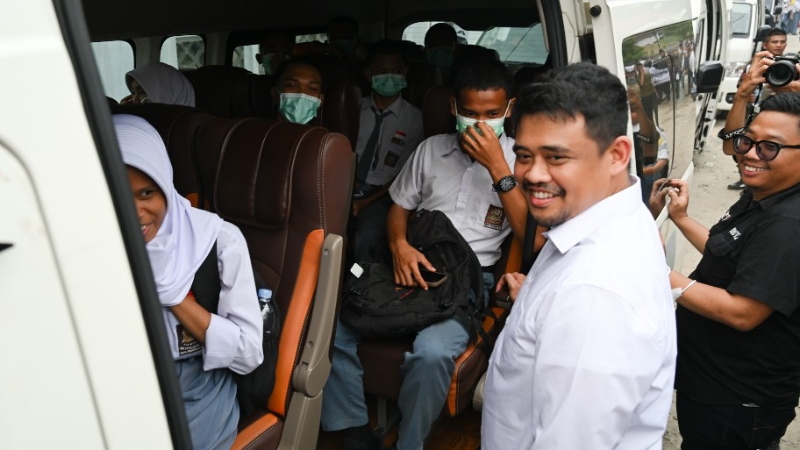
To support efforts to tackle the smog, the North Sumatra Provincial Government has already attempted to induce rainfall through weather modification. Bobby said the operation had been carried out in Samosir Regency, with plans to extend the initiative to other areas.
"We have already tried weather modification in Samosir Regency. We plan to continue this measure in other areas as well," he said.Weather modification is one of the measures the government is using to improve conditions contributing to the spread of smog. However, its implementation depends on atmospheric conditions and the availability of supporting resources.
The North Sumatra Provincial Government must continue monitoring air quality to assess how the situation develops. The findings can provide a basis for further decisions aimed at protecting public health while ensuring that education continues.Under the current circumstances, remote learning for pupils at senior secondary schools, vocational schools and special-needs schools is a measure that can be implemented in the short term to reduce exposure to smog. It allows pupils to continue their education without having to travel to school when air quality reaches potentially dangerous levels.
Continuity of education must also be maintained throughout the introduction of remote learning. Schools must ensure that teachers continue delivering lessons, setting assignments and supporting pupils in accordance with the applicable remote-learning procedures. This approach can strengthen health protection without restricting children's right to education.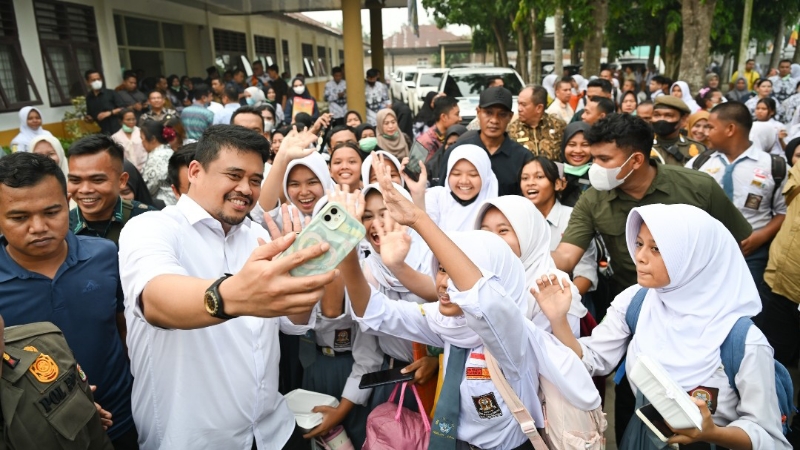
Alongside weather modification, the North Sumatra Provincial Government has coordinated with the South Sumatra Provincial Government on measures to tackle the smog problem. The discussions have also covered the possible use of supporting technologies to reduce the impact of smoke.
"We are also working with South Sumatra Province to use supporting technologies to reduce smoke pollution," Bobby explained.Co-operation between the provincial administrations forms part of broader efforts to address a problem whose effects extend beyond administrative boundaries. Sharing information and deploying supporting technologies could help authorities plan their responses according to the latest developments.
The collaboration also highlights the importance of co-operation between regions in tackling environmental problems that can affect public health. Authorities need to combine immediate protective measures, air-quality monitoring and efforts to address the causes of smog so that their responses reflect the actual needs of local communities.Bobby urged all regency and municipal administrations to remain vigilant and put public safety first. Air-quality monitoring, public education about health risks, weather modification and inter-provincial co-operation are among the measures being used by the North Sumatra Provincial Government to respond to the spread of smog.
By introducing remote learning, the government aims to balance the protection of pupils' health with the continuation of their education. Children will continue learning from home, while local administrations are expected to monitor air quality continuously and adjust protective measures to reflect developments in their respective areas. (IDNC)REPORTER: Ahmad Zulfikar | EDITOR: Fik Sagala