Monday, 28 September 2026
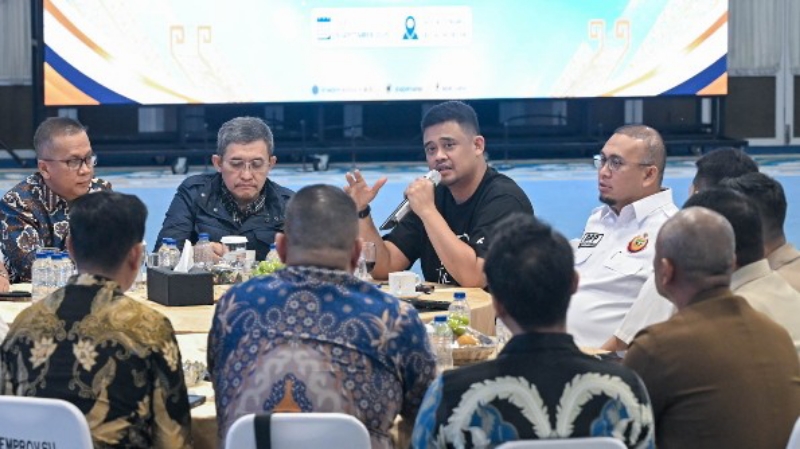
MEDAN | INDATANEWS.COM - North Sumatra Governor Bobby Nasution is pushing to accelerate the development of public housing, particularly subsidized homes for low-income communities (MBR). The measures were discussed during a meeting with Deputy Chairman of Commission VI of the Indonesian House of Representatives (DPR RI) Andre Rosiade and several housing developer associations in North Sumatra.
The meeting was held on Saturday evening, September 26, 2026, at the Tengku Rizal Nurdin Hall (TRN) at the North Sumatra Governor's Office. The discussion focused on various obstacles faced by housing developers in providing subsidized homes, including high construction material prices and administrative procedures that, according to the participants, need to be accelerated.Bobby Nasution said the provincial government must work together with relevant stakeholders to find solutions to keep construction costs for subsidized housing affordable. One option is to consolidate the government's material requirements with those of housing developers. By purchasing materials in larger quantities, lower procurement prices could be secured.
"We are trying to find solutions together regarding construction material prices. We need to work together so that material prices can come down. If larger quantities are purchased, discounts can be obtained. The government also has material needs to support its construction programs," Bobby Nasution said.Under this model, larger quantities of materials could be procured jointly, allowing the government and developers to obtain more competitive prices. The North Sumatra provincial government is also considering involving regionally owned enterprises (BUMD) in the procurement mechanism.
"For example, if the government needs construction materials, we can inform the supplier of the required quantity. The needs of housing developers can then be added. Larger orders can secure discounts and lower prices. Procurement can be carried out through our BUMD," Bobby said.According to Bobby Nasution, consolidating material requirements could serve as a form of support from the regional government for the national program to build one million homes. The initiative is particularly aimed at expanding access to decent and affordable housing for low-income communities.
In addition to construction material costs, the regional government is also focusing on administrative procedures related to the construction and provision of subsidized housing. Bobby Nasution said the processing of land certificates, among other matters, requires particular attention so that construction work and the handover of homes to residents are not disrupted.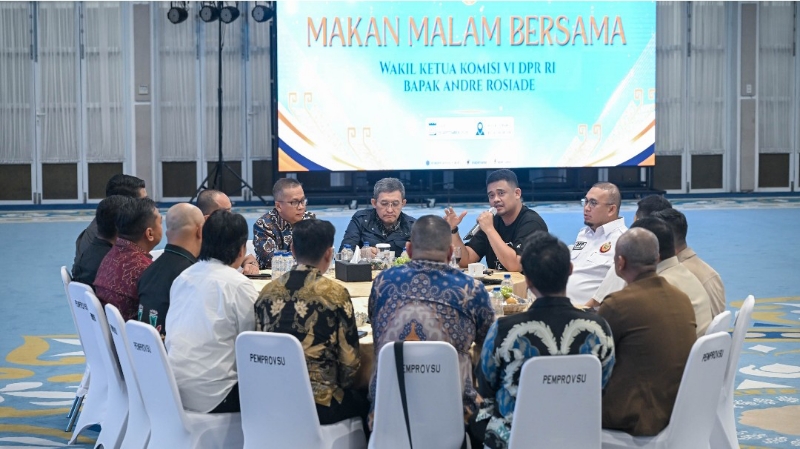
According to Bobby Nasution, the North Sumatra provincial government is working to improve coordination among stakeholders so that various administrative procedures in the housing sector can be completed more quickly. The regional government cannot resolve these challenges alone, as subsidized housing development involves various parties, including banks, housing developers, BUMD, and central and regional governments.
"What is important is that all parties involved must help one another, including banks, BUMD, regional governments and other stakeholders. The problems must be resolved together because this is a national program," Bobby said.Bobby Nasution emphasized that stronger coordination among stakeholders is important to ensure the implementation of public housing programs. The regional government must also ensure that problems arising in the field are promptly discussed and resolved so that the provision of housing for people in need is not delayed.
Housing development for low-income communities faces various challenges. In addition to construction material prices, developers must deal with financing issues, administrative procedures, land availability, and coordination with various institutions involved in the construction and allocation of subsidized housing.Therefore, the regional government and stakeholders continue to seek cooperation models that can accelerate these processes. The government expects such cooperation not only to support housing developers but also to provide direct benefits to residents who receive housing through these programs.

Andre explained that the measures are in line with the central government's efforts to advance the provision of subsidized housing in various regions across Indonesia. The government continues to promote cooperation among government institutions, businesses, banks, housing developers and other relevant stakeholders to meet the population's housing needs.
Andre also acknowledged Bobby Nasution's attention to the development of various regions in North Sumatra. In his view, greater government attention should be given to areas that continue to require development support so that more people can benefit from development programs.As part of the legislative branch, Andre said his side would support various government programs and help advance their implementation. The support also includes efforts to establish conditions that encourage investment and development, including in the housing sector.
The meeting between Bobby Nasution, Andre Rosiade and housing developers was held in an informal atmosphere. The discussion began with a shared meal before continuing with contributions from participants on challenges facing the housing sector in North Sumatra.The participants discussed various obstacles while also seeking solutions that could be implemented through cross-sector cooperation. Several chairpersons and representatives of housing developer associations, BUMD from North Sumatra, and relevant government officials also attended the meeting.
Through the meeting, the regional government and stakeholders strengthened communication aimed at supporting the implementation of public housing programs. Discussions on material prices, bulk procurement, streamlining administrative procedures and strengthening cooperation formed an important part of efforts to accelerate the provision of subsidized housing for low-income communities in North Sumatra. (IDNC)REPORTER: Ahmad Zulfikar | EDITOR: Fik Sagala





 /home/u7391150/public_html/indatanews.com/theme/function.php on line 28