Monday, 28 September 2026
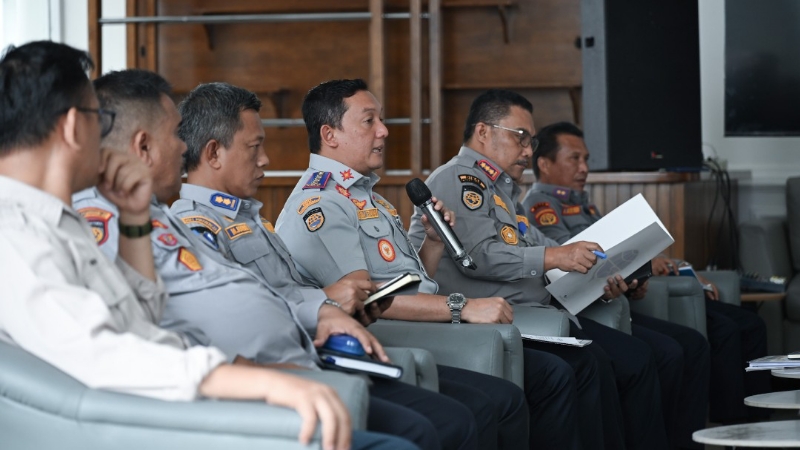
MEDAN | INDATANEWS.COM - The North Sumatra Provincial Government is preparing a cashless one-time payment system for passengers using the Medan-Binjai-Deliserdang Bus Rapid Transit (BRT Mebidang). The integrated payment system is designed to allow passengers to pay only once for a journey, even when they change corridors or buses, as long as they remain within the designated transit network.
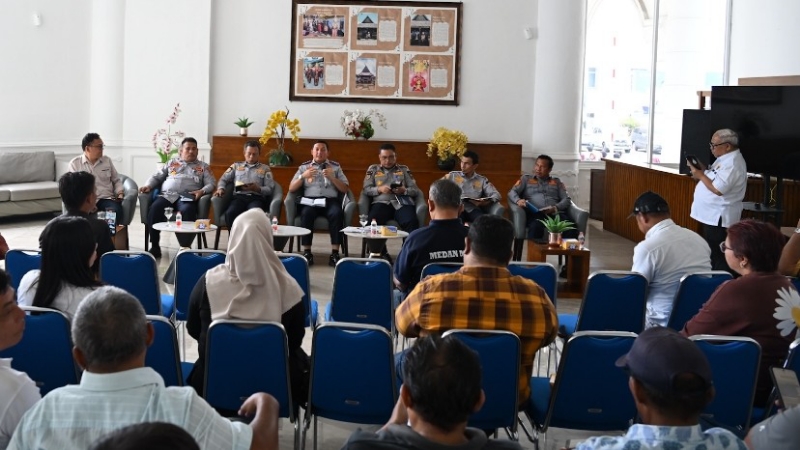
The introduction of the system is part of the provincial government's efforts to make public mobility more efficient while reducing travel costs. At the same time, the government is promoting the use of digital payment technology as part of the modernization of public transportation services in Medan, Binjai, and Deliserdang.The Head of the North Sumatra Transportation Agency, Yuda Pratiwi Setiawan, outlined the plan during a press briefing organized by the North Sumatra Provincial Communication and Informatics Agency on Friday, September 25, 2026, in the lobby of Dekranasda North Sumatra at the Governor's Office on Jalan Pangeran Diponegoro No. 30, Medan.
On the occasion, Yuda also provided an update on BRT Mebidang operations, which are still in the trial phase. The provincial government plans to fully launch the public transportation service on December 8, 2026."On December 8, all 30 buses will be available in North Sumatra and will be able to serve the people in the Mebidang region," he said.
For full BRT Mebidang operations, the government is providing a total of 30 buses. Fourteen buses will operate on Corridor 11, serving the Teladan-Lubukpakam Terminal route. Another 13 buses will serve Corridor 12 on the Simpang Barat-Binjai route. Three additional buses will be kept as reserve units to ensure operational continuity.With the full fleet available, the BRT Mebidang network is expected to increase its capacity and provide residents with a more organized means of traveling between different areas across the Mebidang region.
BRT Mebidang is one of the North Sumatra Provincial Government's regional strategic projects. The project is being implemented in cooperation with the central government as well as district and municipal governments within the service area.The project involves an electric-bus-based public transportation system designed to support mobility in Medan, Binjai, and Deliserdang. The government is developing the service partly to reduce traffic congestion and air pollution while providing a more modern and environmentally friendly public transportation option.
During the trial period, passengers can continue to use BRT Mebidang free of charge. Once regular operations begin, the fare for general passengers is set at Rp4,300.For certain groups, the government plans to provide a discounted fare of Rp3,000. These groups include students, people with disabilities, and senior citizens. The fare arrangement is intended to ensure that public transportation remains accessible to various segments of the population.

Yuda explained that cashless payments using electronic money cards and QRIS through the "Scan & Tap" mechanism would be introduced. Under the system, passengers would not have to pay again when changing corridors or buses during their journey, as long as the trip remains within the integrated transportation network.
The one-time payment system is particularly intended to accommodate passengers traveling between different corridors. They would only need to tap their card on a reader or scan using the designated cashless payment method once for a journey, provided that the trip meets the requirements for integrated use."For example, suppose we travel from Pakam to Amplas or along the SM Raja corridor. If the passenger gets off there because they want to continue to Pos Blok, they do not have to pay again. One payment is enough. They can then wait for the next bus to Pos Blok without making another payment, as long as they do not leave the corridor. That is our plan so that the public is not burdened with additional costs," he explained.
According to Yuda, the concept is intended to prevent passengers from incurring additional costs when transferring between buses as part of a continuous journey. The integrated payment function is also expected to make public transportation easier to use for people traveling between different areas.The introduction of the digital payment system is an important part of the further development of BRT Mebidang. Besides simplifying fare payments, the system could help strengthen the integration of transportation services as public transportation use increases in urban areas.
The government is constructing the bus stops as part of efforts to strengthen the BRT Mebidang network. Properly designed stops are expected to make it easier for passengers to board and alight while contributing to more orderly public transportation operations.
The infrastructure development is also part of preparations for the full launch of BRT Mebidang in December 2026. The government hopes that the bus fleet, payment system, and supporting infrastructure can be completed in parallel so that residents can increasingly access convenient public transportation services.The development of BRT Mebidang is not limited to providing buses but also includes integrating the payment system and constructing the necessary infrastructure. All components are intended to be brought together into a more modern public transportation system serving the regions of Medan, Binjai, and Deliserdang.
With the full deployment of 30 buses, the introduction of cashless one-time payments, and continued bus stop construction, the North Sumatra Provincial Government aims to make BRT Mebidang an important part of public mobility while strengthening the use of public transportation in urban areas.The deployment of electric buses under the BRT Mebidang program also represents the development of a more environmentally friendly transportation system. The government expects the service to provide residents with increasing alternatives to private vehicles and help manage the region's growing mobility demand through an integrated public transportation system. (IDNC)
REPORTER: Ahmad Zulfikar | EDITOR: Fik Sagala




 /home/u7391150/public_html/indatanews.com/theme/function.php on line 28