Friday, 23 October 2026
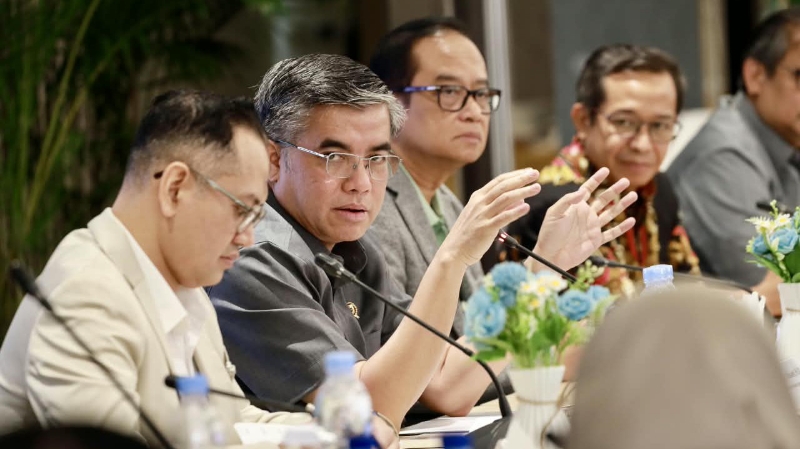
JAKARTA | INDATANEWS.COM - Indonesia's Ministry of Manpower and the National Movement for Competency Development of Indonesia (Gerakan Nasional Indonesia Kompeten, GNIK) are stepping up their collaboration to promote future skills that meet industrial requirements and respond to changes in the world of work. Their priorities include improving workers' competencies, widening access to vocational training and professional development, and boosting national productivity amid rapid technological advancement.
Manpower Minister Yassierli emphasised the need for the government to strengthen partnerships with human resources management professionals to ensure that skills development programmes meet the actual needs of businesses and industry. In his view, labour market policies must go beyond resolving industrial relations disputes and make productivity growth one of their central objectives."Labour market policies must be able to respond to the actual challenges on the ground by expanding the scope of collaboration. The focus must not be limited to resolving industrial relations problems; above all, increasing productivity must be the priority," Yassierli said on Saturday, 17 October 2026, at the GNIK Academy brainstorming event in Jakarta. The event was held under the theme "Developing Collaborative Solutions to Build Future Skills for Indonesia" (Solusi Kolaboratif Membangun The Future Skills untuk Indonesia).
This collaboration is becoming increasingly important as technological change continues to reshape occupations and the qualifications required by businesses. Advances in artificial intelligence (AI), information technology and the green economy are prompting the world of work to develop new competencies that match the evolving needs of industry.In his view, academic qualifications alone are not sufficient when selecting employees. Candidates' practical skills are also essential to ensure that workers' competencies match the requirements of their respective industries.
This approach requires the involvement of various stakeholders in designing skills development programmes. The government, businesses, human resources professionals and educational institutions must work together to align industrial skills requirements with the competencies available in the labour market.Through this collaboration, training programmes are expected to help Indonesian workers adapt to changes in the world of work, improve their competitiveness and seize opportunities arising from the digital transformation. The development of new competencies must also take into account the needs of emerging economic sectors, where both technical expertise and adaptability are essential.
Yassierli believes that businesses can accelerate professional skills development through joint learning and knowledge sharing. A collaborative model would allow companies to exchange experience, resources and best practices without having to establish their own learning systems independently."Future skills are a shared challenge for all industries. Rather than having every company build its own costly platform, we should bring together our existing potential and knowledge through a shared learning platform," he said.

The government plans to use this information as a basis for designing training initiatives and skills development programmes. Better-integrated data will enable it to align training provision more closely with actual labour market requirements, rather than relying solely on estimates or general approaches.
The development of the information system includes updating Indonesia's Standard Occupational Classification (Klasifikasi Baku Jabatan Indonesia, KBJI), compiling a list of critical or strategically important occupations in high demand across industry, and integrating the SIAPKerja portal with the database of Statistics Indonesia (Badan Pusat Statistik, BPS).Updating the occupational classification is expected to help the government identify changes in job roles and the competencies required for them. Meanwhile, the list of critical occupations will provide guidance on the fields that require particular attention when developing workforce qualifications.
Linking the SIAPKerja portal with the BPS database is also expected to improve the use of labour market information. These data will enable the government to monitor employment trends more effectively and develop more targeted programmes to strengthen workers' competencies.This initiative is an important part of efforts to match businesses' workforce requirements with the supply of appropriately qualified workers. Accurate labour market information can also help educational institutions select learning content that is relevant to current industrial developments.
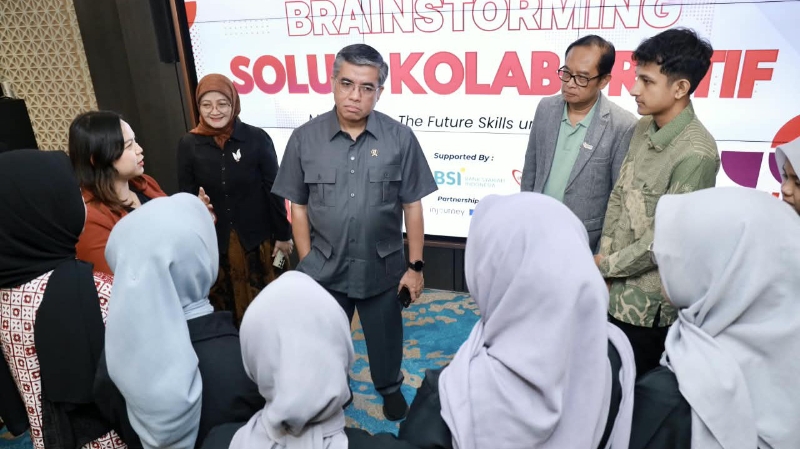
The partnership aims to combine the government's role as an enabler with industry experience in identifying skills requirements. This approach is intended to ensure that skills development does not depend solely on government programmes, but also benefits from the active participation of businesses and professional communities.
Cross-sector collaboration also offers an opportunity to widen access to learning for workers and young people. By sharing knowledge and pooling resources, stakeholders can build a more efficient learning ecosystem that responds more quickly to changing skills requirements.Yassierli highlighted the need for collective support to develop young people's competencies so that they can meet the increasingly dynamic challenges of the world of work.
"The fundamental principle we will always uphold is: from GNIK and the nation, through GNIK and the nation, and for GNIK and the nation. The government is ready to provide the necessary infrastructure and supporting regulations so that the younger generation's competencies can develop to their full potential," Yassierli concluded.Through cooperation between the Ministry of Manpower and GNIK, the government hopes to accelerate the development of future skills in a more targeted manner, reach more workers and respond sustainably to industrial needs. Strengthening professional qualifications is also an important step towards improving the competitiveness of Indonesian workers amid the digital transformation and intensifying competition in the global labour market. (IDNC)
REPORTER: Ahmad Zulfikar | EDITOR: Fik Sagala