Monday, 30 November 2026
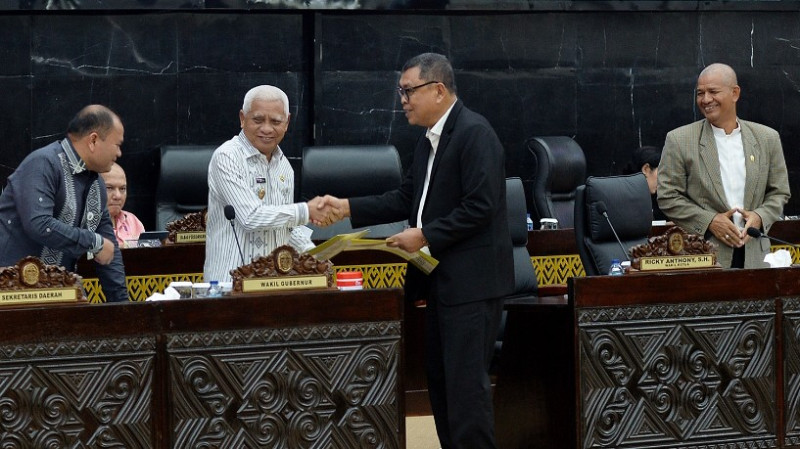
MEDAN | INDATANEWS.COM - The North Sumatra Provincial Government is committed to refining its regional development priorities in the 2027 Draft Regional Budget (Ranperda APBD 2027), taking into account recommendations from political factions in the North Sumatra Regional House of Representatives (DPRD). Key sectors, including education, healthcare, agriculture, food security and infrastructure, will receive particular attention in the planning and allocation of funds for the coming financial year.
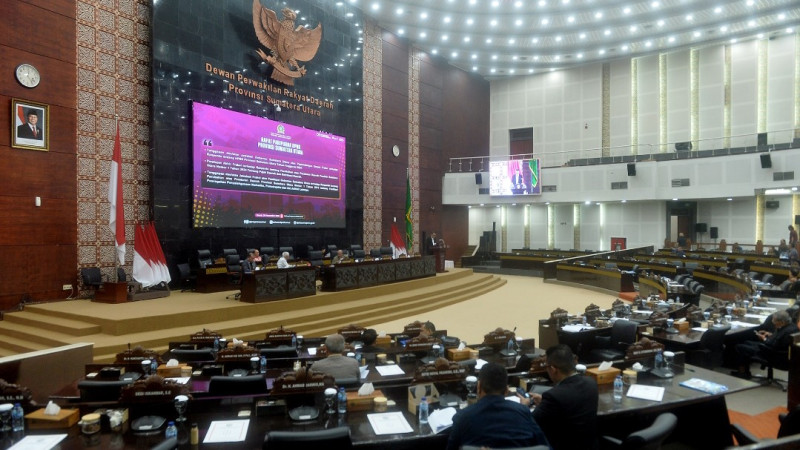
The commitment was outlined by North Sumatra Deputy Governor Surya when he delivered Governor Bobby Nasution's response to the general statements submitted by the DPRD factions during a plenary session at the North Sumatra DPRD building in Medan on Thursday, 26 November 2026. Surya was accompanied by Acting Provincial Secretary Timur Tumanggor.Surya emphasised that the views and recommendations put forward by the DPRD factions represented important input for the provincial government in improving its 2027 budget policies. These contributions would inform the refinement of regional development planning, budgeting, implementation, monitoring and evaluation.
He said budget discussions should not focus solely on meeting government spending requirements. Each programme must also have clearly defined objectives, measurable performance indicators and a direct impact on people's welfare.In Governor Bobby Nasution's written response, delivered by Surya, the provincial government said it would seek to meet the required funding through the 2027 planning and budgeting process, while taking the region's financial capacity into account.
"The North Sumatra Provincial Government is committed to seeking the necessary funding through the 2027 planning and budgeting process, while continuing to take the region's financial capacity into account. Through the continuation of this programme, all pupils attending state senior high schools (SMA), vocational high schools (SMK) and special-needs schools (SLB) are expected to gain more affordable and equitable access to education," Deputy Governor Surya said.The programme is expected to expand access to affordable education and help reduce disparities in educational opportunities between different parts of the province. The provincial government must also ensure that funding arrangements reflect the actual needs of schools across the regencies and cities.
In the healthcare sector, the provincial government also responded to questions from DPRD factions concerning contributions for non-wage-earning participants (PBPU) under the Universal Health Coverage (UHC) programme.Of the planned healthcare budget totalling Rp471.5 billion, Rp350 billion has been allocated to support the UHC programme.
A further Rp81 billion is earmarked for improving the capacity of inpatient community health centres, known locally as Puskesmas. The remaining funds will support improvements in healthcare services, including the provision of medical equipment and medicines.Surya said the government had incorporated these requirements into the 2027 Regional Government Work Plan (RKPD), with spending priorities determined according to expected outcomes and benefits for the public.
"These measures have been incorporated into the 2027 Regional Government Work Plan (RKPD), with priorities based on results and benefits that people can directly experience," Surya said.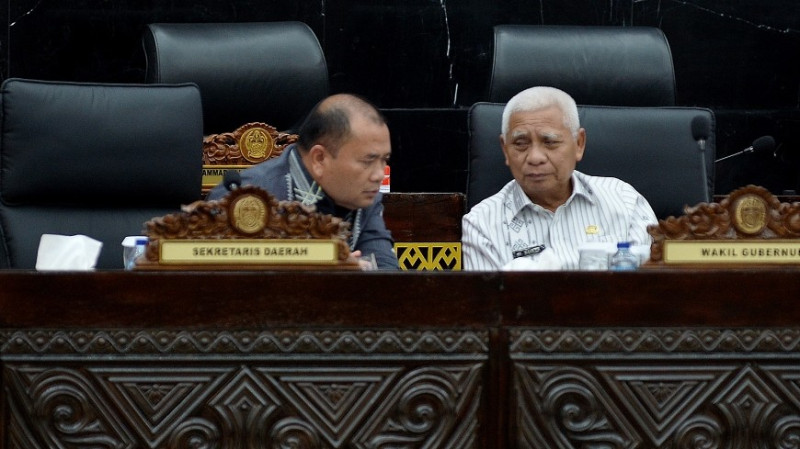
Alongside education and healthcare, agriculture and food security are also central to the provincial government's efforts to refine the 2027 budget. The government addressed recommendations from DPRD factions concerning the development of organic farming, downstream processing of agricultural commodities, stronger farmer institutions and the expansion of cooperatives.
To improve agricultural productivity, the North Sumatra Provincial Government plans to develop farming areas based on the region's leading commodities. Its priorities include improving the availability of high-quality seeds and planting materials, optimising irrigation networks and providing agricultural production facilities and infrastructure.These measures aim to increase agricultural output while generating greater added value from the province's leading commodities. The development of the agricultural sector also requires reliable marketing systems to ensure that increased production translates into higher incomes and better living standards for farmers.
To maintain price stability and provide farmers with greater certainty over market access, the provincial government has established cooperation agreements with regency and city administrations to facilitate the purchase and absorption of agricultural produce.Meanwhile, food security initiatives will focus on strengthening regional government food reserves, monitoring food prices and supplies, facilitating food distribution and organising affordable food market programmes.
These measures form part of the regional government's strategy to maintain the availability of essential food supplies while limiting price fluctuations in the market. The government also aims to ensure smooth distribution so that people can obtain basic necessities at affordable prices.Surya explained that strengthening agriculture and food security involved more than increasing production. Reliable markets, efficient distribution systems and the protection of household purchasing power were equally important.
The allocation will support the construction and upgrading of roads, bridges and irrigation networks, water resource management, and the provision of adequate, affordable and inclusive housing. The government will also consider disaster resilience when determining infrastructure development priorities.
Surya said infrastructure development should not focus solely on improving connectivity and stimulating economic growth. The government must also ensure that infrastructure strengthens regional resilience, particularly in areas exposed to natural disaster risks.The provincial government will therefore consider project priorities and the specific conditions of each area when allocating funds. This approach is intended to ensure that investment reaches communities requiring better access to essential services while improving economic connectivity.
Beyond funding allocations, the provincial government has also stressed the importance of assessing development programmes according to their results and measurable impact. The success of a programme should not be judged solely by the amount of money spent, but also by the tangible improvements experienced by the public."The North Sumatra Provincial Government remains focused on results and benefits for the public. Performance indicators must therefore be directed towards measurable outputs and outcomes and linked to regional development targets. Evaluations should not only examine budget realisation, but also assess the extent to which programmes deliver tangible results, such as improvements in road quality and essential public services," the Deputy Governor added.
This results-based approach is considered essential to strengthening accountability in regional budget management. Each programme is expected to have measurable targets that can be evaluated to ensure public funds contribute directly to the achievement of regional development objectives.Surya expressed hope that the recommendations and responses submitted by the DPRD factions during the 2027 budget discussions would strengthen cooperation between the executive and legislative branches of government. He said a constructive partnership was necessary to ensure that the budget deliberations remained objective, transparent and focused on the interests of the public.
Following the presentation of the Governor's response by Deputy Governor Surya, North Sumatra DPRD Deputy Speaker Sutarto, who chaired the session, scheduled a further plenary meeting to hear the factions' final positions on the 2027 draft regional budget.The next stage will form part of the legislative process before the North Sumatra Provincial Government and the DPRD reach a joint decision on the region's 2027 budget. (IDNC)
REPORTER: Ahmad Zulfikar | EDITOR: Fik Sagala