Monday, 30 November 2026

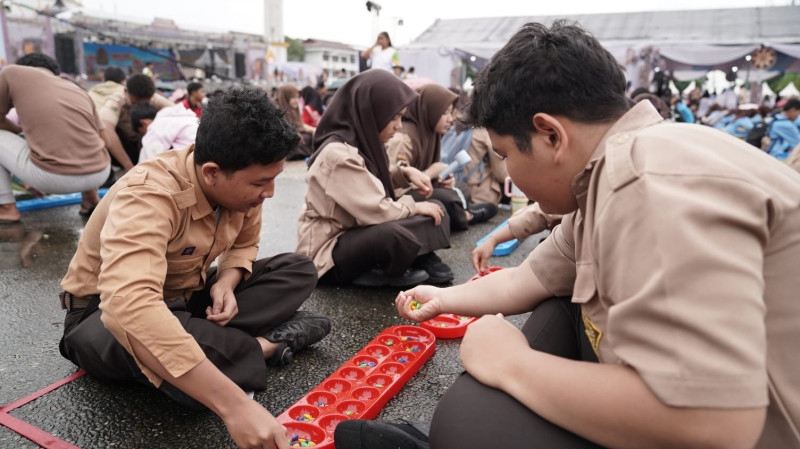
DELI SERDANG | INDATANEWS.COM - North Sumatra has marked a new milestone in cultural preservation after 1,200 participants simultaneously played congklak, setting a record with the Indonesian Museum of World Records (MURI) in the category of 'Most Participants Playing Congklak'. The event took place at Astaka Field, Pancing, Jalan Willem Iskander, Deli Serdang Regency, on Saturday, 28 November 2026, at 10 am local time.
The achievement represents an important opportunity to bring traditional games back into the public spotlight, particularly among younger generations. At a time when technology continues to transform lifestyles and entertainment habits, a traditional game passed down through generations has found a new platform through an event involving people from different backgrounds.The gathering marked the culmination of the Teras Main Sumatera Utara programme, held as part of the 2026 North Sumatra Cultural Festival from 27 to 29 November 2026. The programme was initiated by the North Sumatra Department of Culture, Tourism and Creative Economy in collaboration with the North Sumatra Provincial Committee for Indonesian Folk Games and Traditional Sports (KPOTI).
MURI Senior Manager Triyono attended the event in person to verify the proceedings and confirm the number of participants taking part in the simultaneous congklak game. Following the verification process, MURI recognised the achievement as a record for the highest number of participants playing the traditional game.
Triyono subsequently presented MURI Award Certificate Number 13055/R.MURI/XI/2026 to North Sumatra Governor M. Bobby Afif Nasution in recognition of the achievement.Triyono said the accomplishment demonstrated that traditional games still had considerable potential to encourage public participation and bring communities together. He also viewed the initiative as an example that other regions could follow in their efforts to safeguard cultural heritage.
The participation of 1,200 people in a single event demonstrated that congklak is more than simply a game from the past. It can serve as a means of social interaction, bringing together different sections of society while promoting values of togetherness through an activity that is simple and accessible.The record also highlights how cultural preservation does not always have to take place through formal programmes. Local governments, community organisations, cultural institutions and the public can all play a part in reviving traditions through open events that encourage direct participation.
However, Bobby stressed that the achievement should not end with the award presentation ceremony. He hopes the record will mark the beginning of a sustained movement to introduce folk games to younger generations and ensure their continued preservation.
"This achievement is a source of pride for North Sumatra. We hope it will become a sustainable movement to introduce and preserve folk games for younger generations amid the changing times," he said.His remarks underline the importance of maintaining continuity in cultural preservation programmes. A record involving a large number of participants can attract widespread attention, but the long-term survival of a tradition depends on whether communities continue to play it, introduce it to others and pass it on to future generations.
Traditional games face growing challenges as lifestyles change and technology-based entertainment becomes increasingly accessible. Events involving children, teenagers, families and community groups therefore offer one way to keep folk games relevant and ensure they remain part of everyday social life.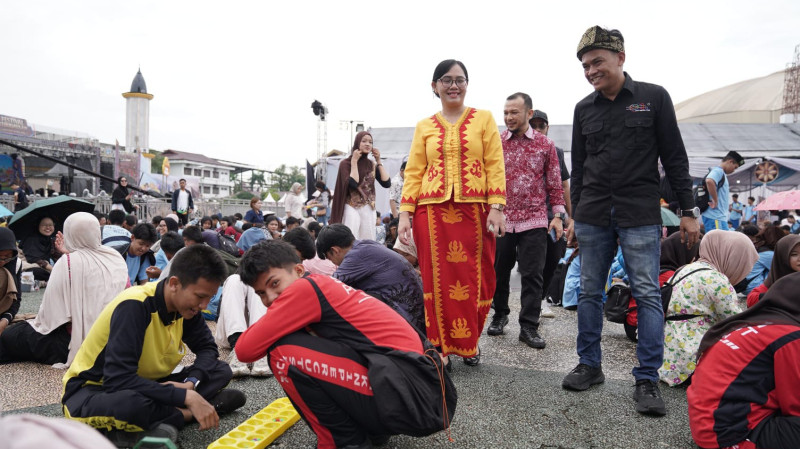
Terang Dewi Susantri Ujung, Head of the North Sumatra Department of Culture, Tourism and Creative Economy, said traditional games had the potential to develop beyond entertainment and social activities. With creative presentation and active public participation, they could become attractive cultural tourism experiences.
This approach offers local authorities an opportunity to integrate the preservation of folk games with regional tourism promotion. Cultural festivals, traditional game demonstrations and interactive activities can become part of a visitor experience that introduces the identity and cultural diversity of local communities.The development of cultural tourism can also create greater opportunities for local communities to participate. Residents can take on roles beyond those of event participants by introducing the history, rules and cultural values behind traditional games.
Meanwhile, Agustin Sastrawan Harahap, Chairman of KPOTI North Sumatra, emphasised that the MURI record was not the organisation's ultimate objective. Instead, he viewed the achievement as a catalyst to encourage communities to revive traditional games and pass them on to future generations.This perspective places cultural preservation within the scope of shared responsibility. Organisations, community groups, families, educational institutions and government bodies all have a role in ensuring that traditional games do not appear only at festivals or special celebrations, but once again become part of everyday community life.
Alongside the congklak activity, organisers also presented several supporting programmes at Astaka Field. These included an exhibition of traditional games, public information sessions on traditional sports, and workshops featuring creative crafts made from young coconut leaves, known locally as janur, as well as kite-making.The activities highlighted the diversity of traditional games and craftsmanship that can continue to develop as part of Indonesia's cultural identity. They also gave visitors an opportunity to experience cultural heritage directly rather than simply learning about it through stories or documentation.
The participation of 1,200 people in North Sumatra's MURI record attempt ultimately represents more than a numerical achievement. It sends a broader message: cultural heritage can survive only when communities have the opportunity, willingness and commitment to practise it.The next challenge is to ensure that the enthusiasm generated by the 2026 North Sumatra Cultural Festival develops into a sustained preservation movement that reaches younger generations and wider sections of society. (IDNC)
REPORTER: Ahmad Zulfikar | EDITOR: Fik Sagala