Thursday, 26 November 2026
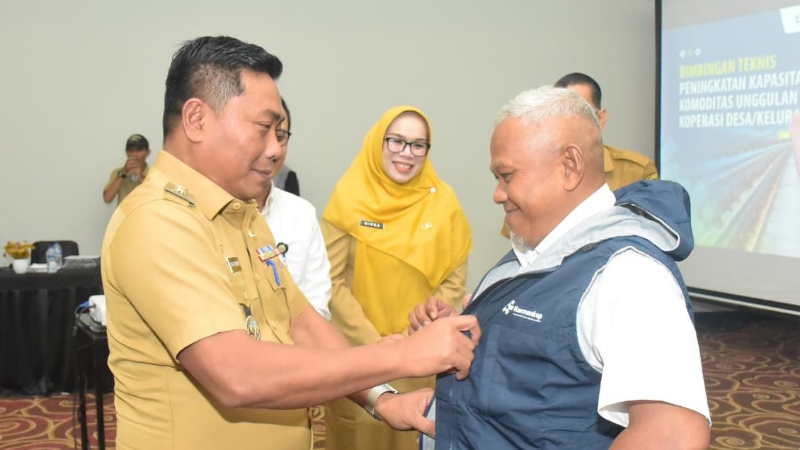
DELI SERDANG | INDATANEWS.COM - Indonesia's Ministry of Cooperatives (Kemenkop RI) is encouraging Merah Putih Village and Urban Village Cooperatives (KDMP) to develop layer poultry farming as a flagship business to strengthen food security and improve local livelihoods.
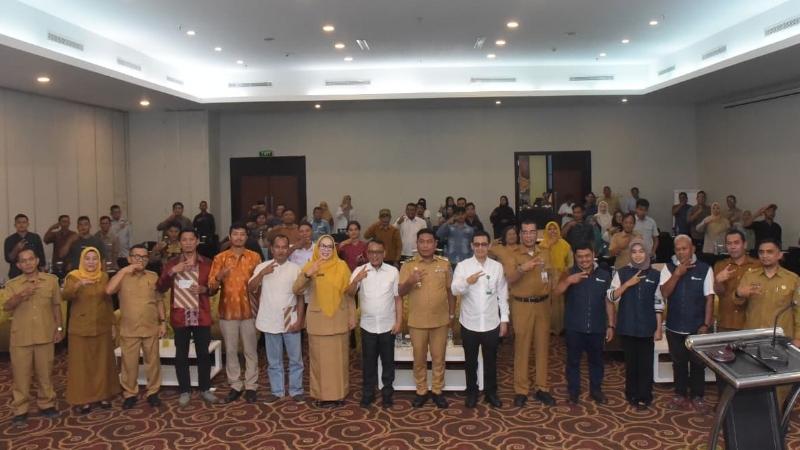
The initiative forms part of the government's efforts to establish a cooperative-based livestock business ecosystem that connects poultry farmers more effectively with market demand. Alongside increasing egg production, the programme is expected to strengthen local food supply chains, particularly by supporting the requirements of the Free Nutritious Meals Programme (MBG).The initiative was implemented through a technical training programme on increasing production capacity for flagship commodities within Merah Putih Village and Urban Village Cooperatives. The programme was organised by the Ministry of Cooperatives in collaboration with the Deli Serdang Regency Government at D'Prima Hotel Kualanamu, Batang Kuis District, on Monday, 23 November 2026.
The training was officially opened by Elviandi RS, Deputy Assistant for Production Development at the Ministry of Cooperatives. Those attending included Deli Serdang Deputy Regent Lom Lom Suwondo, Secretary of the North Sumatra Provincial Office of Cooperatives and SMEs Tengku Yudhi Media, several regional government officials, cooperative representatives and egg farmers.In his address, Elviandi said the livestock sector played a strategic role in strengthening food security and meeting public demand for animal protein. He highlighted the considerable potential in North Sumatra, particularly Deli Serdang Regency, to expand layer poultry farming through cooperative organisations.
According to figures from Statistics Indonesia (BPS) cited in his speech, national production of commercial chicken eggs reached approximately 6.31 million tonnes in 2025. North Sumatra contributed around 585,000 tonnes of that total.The figures highlight significant opportunities for expanding egg production across the region. However, this production potential requires better-organised business management to deliver sustainable economic benefits for farmers and local communities.
Elviandi acknowledged that the livestock sector continued to face several challenges. These included high feed costs, animal health issues, fluctuating market prices, limited access to capital and difficulties reaching wider markets.To address these obstacles, cooperatives need to play a greater role in developing integrated livestock businesses. Rather than functioning solely as membership organisations, they should act as aggregators, bringing together farmers' production and strengthening their collective market position.
Through this approach, cooperatives can facilitate the procurement of animal feed and production equipment, improve access to financing and expand marketing networks. A collective business system is expected to give farmers greater bargaining power when dealing with price fluctuations and market competition.Alongside stronger cooperative institutions, Elviandi stressed the importance of implementing Good Farming Practices (GFP). Poultry farmers should also meet the requirements for the Veterinary Control Number (Nomor Kontrol Veteriner/NKV) certification to ensure product quality, animal health and food safety.
He said compliance with these standards was essential to building consumer confidence and improving the competitiveness of egg products. Proper farm management, including appropriate health and sanitation practices, would also support the long-term sustainability of poultry businesses.Elviandi added that cooperative-based layer farming offered considerable opportunities to become part of local food supply chains. One particularly promising prospect was supplying eggs for the Free Nutritious Meals Programme (MBG).
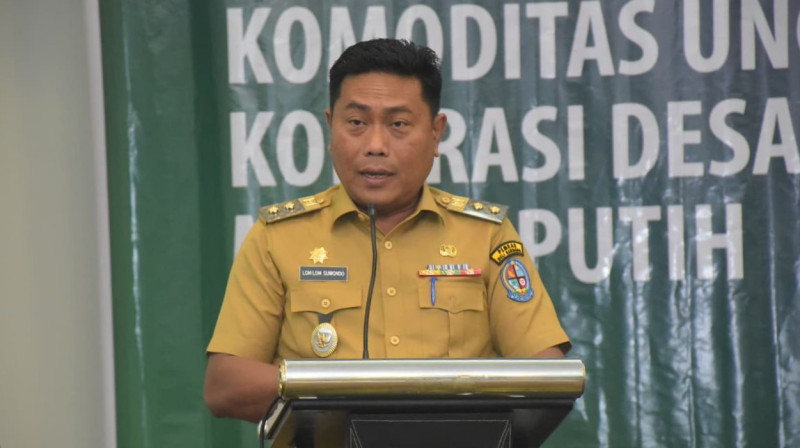
Deli Serdang Deputy Regent Lom Lom Suwondo welcomed the training initiative. He described the development of cooperative-based layer poultry farming as a practical way to maximise local economic potential while strengthening regional food security.
Lom Lom said livestock farming was spread across all 22 districts of Deli Serdang. The local government was encouraging both egg and broiler chicken farmers to work with Merah Putih Cooperatives so that local food requirements could be met through regional production."We want farmers in Deli Serdang to be able to meet local demand first before their products are marketed outside the region," he said.
According to Lom Lom, closer cooperation between farmers and cooperatives should focus on establishing a more efficient distribution system. This would allow locally produced eggs to reach regional markets before being supplied to consumers in other areas.He also expressed hope that stronger cooperatives would help stabilise livestock commodity prices. This was important to ensure that farmers received reasonable returns while consumers continued to have access to affordable food.
Lom Lom reaffirmed the Deli Serdang Regency Government's commitment to supporting Merah Putih Cooperatives as drivers of the local economy. He said the area's agricultural and livestock resources, together with its diverse geographical characteristics, provided a strong foundation for expanding food production.With these advantages, Deli Serdang has the potential to become one of North Sumatra's major food production centres. Continued cooperation between local authorities, cooperatives and business operators will be essential to turning that potential into productive economic activity.
Meanwhile, Tengku Yudhi Media, Secretary of the North Sumatra Provincial Office of Cooperatives and SMEs, said Merah Putih Cooperatives should serve as a link between the community's production capacity and market demand.He explained that North Sumatra had a diverse economic resource base, covering agriculture, plantations, fisheries, livestock, manufacturing and tourism. These sectors needed to be integrated through business systems connected to markets and industry.
Tengku Yudhi considered cooperative-based layer poultry farming a promising business model. Opportunities were particularly strong given the potential to supply food requirements under the Free Nutritious Meals Programme.The North Sumatra Provincial Government, he added, was ready to work with regency and municipal administrations to identify regional economic potential and suitable cooperatives for targeted community economic empowerment programmes.
The programme ran for two days, from 23 to 24 November 2026. On the first day, participants received training on strengthening cooperative institutions, poultry farm management, Good Farming Practices, hygiene and sanitation, Veterinary Control Number certification, and partnership opportunities within the supply chain of the Free Nutritious Meals Programme.
On Tuesday, 24 November 2026, participants were scheduled to undertake an observational visit to PT Sahabat Jaya Farm, a layer poultry operation in Tanjung Selamat Village, Percut Sei Tuan District. The visit was intended to provide practical insight into the management of productive and sustainable egg farming businesses.Miska explained that the training aimed to improve the capabilities of cooperative board members, managers and members in developing productive, healthy and sustainable layer poultry businesses. The additional knowledge and skills were expected to help cooperatives establish commercially viable business units capable of responding to market demand.
She also outlined the progress of Merah Putih Cooperatives across Deli Serdang Regency. According to the Village Cooperative Management Information System (Simkopdes), there were 394 Merah Putih Village and Urban Village Cooperatives in the regency as of November 2026. Of these, 179 had held their Annual Members' Meetings (RAT).Meanwhile, construction of cooperative warehouses and retail outlets had reached 130 units, all of which had been completed in full, representing a 100 per cent completion rate.
These developments provide an important institutional and infrastructure foundation for expanding cooperative business activities. However, the availability of buildings and facilities needs to be accompanied by stronger management, business development and productive partnerships to ensure that cooperatives can operate sustainably.Through the training programme, the government hopes to strengthen cooperation between central government, regional administrations, cooperatives and poultry farmers. This collaboration is expected to establish an integrated livestock business ecosystem covering production inputs, animal husbandry, product quality and marketing.
The development of layer poultry farming through Merah Putih Cooperatives is intended to achieve more than increased production capacity. The business model is also expected to strengthen local food supplies, create partnership opportunities with government programmes, improve farmers' productivity and raise community living standards.By making better use of regional resources and strengthening cooperatives' role in connecting production with markets, Deli Serdang has an opportunity to increase its contribution to food security in North Sumatra while building a more self-reliant local economy. (IDNC)
REPORTER: Edi Saputra | EDITOR: Fik Sagala