Friday, 13 November 2026
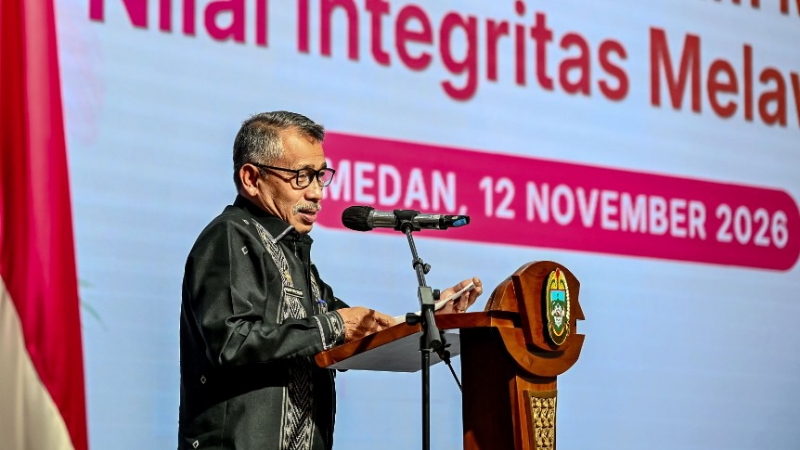
MEDAN | INDATANEWS.COM - The North Sumatra Provincial Government is strengthening efforts to prevent corruption by encouraging women to play a strategic role in instilling integrity values within families and communities. Women are regarded as having considerable influence in shaping the character of younger generations, fostering habits of honesty and encouraging people to reject all forms of corrupt behaviour.
These efforts were highlighted during a technical guidance programme entitled 'Indonesian Women of Integrity: The Role of Women in Building Integrity Values to Combat Corruption'. The event took place at the Raja Inal Siregar Hall, the North Sumatra Governor's Office, Jalan Pangeran Diponegoro No. 30, Medan, on Thursday, 12 November 2026.Basarin Yunus Tanjung, Assistant for Government Affairs and Public Welfare at the Regional Secretariat of the North Sumatra Provincial Government, said preventing corruption required the involvement of every section of society. Women, he added, occupied an important position because they played a direct role in shaping family values while also influencing their wider social environment.
"The presence of the KPK alongside community figures and women's organisations today demonstrates that efforts to prevent corruption require the involvement of the entire community, including women, who play a significant role within families and their social environments," he said.According to Basarin, women have considerable influence in shaping the character of family members. Their responsibilities extend beyond their roles as mothers and wives to include their positions as organisational leaders and active members of society.
Through personal example, women can instil values such as honesty, responsibility, discipline and consideration for others. These habits should become lasting principles in everyday life, guiding children even as they begin to engage more widely with society."We want women not only to benefit from development programmes, but also to become agents of change and guardians of honesty within society," he said.
Basarin stressed that building an anti-corruption culture must not depend solely on government programmes or public awareness campaigns. Society must consistently put integrity into practice through real actions, beginning within the family, where people first learn to understand honesty and responsibility.
He emphasised that upholding integrity was not exclusively a woman's responsibility. Every family member must share the same commitment to an honest way of life and reject actions that harm others.For this reason, the development of an anti-corruption mindset should begin with simple everyday habits. Parents can teach children to tell the truth, take responsibility for their actions, respect other people's rights and have the courage to speak up when they witness wrongdoing.
"We need to develop simple living habits, avoid taking anything that does not belong to us, and have the courage to speak up when something is wrong," he said.Such habits are important in raising awareness that integrity is more than a slogan or a campaign message. It must be reflected in the decisions and behaviour of every individual, whether at home, in the workplace, within organisations or in public life.
Families can therefore serve as the starting point for developing an anti-corruption mindset before those values grow into a wider collective awareness throughout society.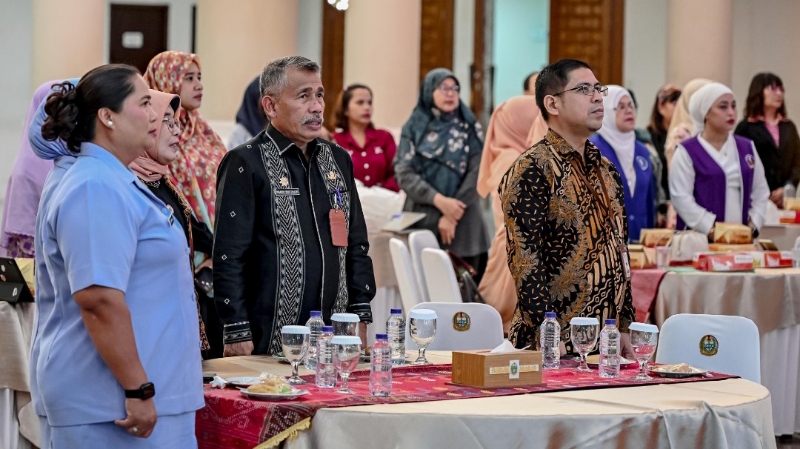
Basarin also believes North Sumatra has considerable potential to expand its anti-corruption movement through established women's organisations. This potential is supported by the province's female population, which stands at approximately 7.8 million.
In addition to its population, North Sumatra has numerous women's organisations with networks extending across regencies, municipalities, sub-districts, villages and urban communities. These include the Family Welfare Movement (PKK), Dharma Wanita Persatuan and various other community organisations.These networks can significantly extend the reach of integrity education, ensuring that anti-corruption messages do not remain confined to formal events. Members can share the knowledge they gain with their families, community groups and people in their respective neighbourhoods.
Basarin believes this approach can strengthen corruption prevention because women's organisations maintain direct links with family life and local communities. Through regular activities, organisational meetings and social programmes, women can communicate the importance of honesty and responsibility."If the integrity values we learn today continue to be shared through these organisational networks, more families and communities will undoubtedly understand the importance of honesty and have the courage to reject corrupt behaviour," he said.
He hopes the technical guidance programme will go beyond a one-off training event and develop into a sustained movement involving women across different parts of North Sumatra. With the support of organisations already operating at village and neighbourhood level, anti-corruption education is expected to become more closely connected to people's everyday lives.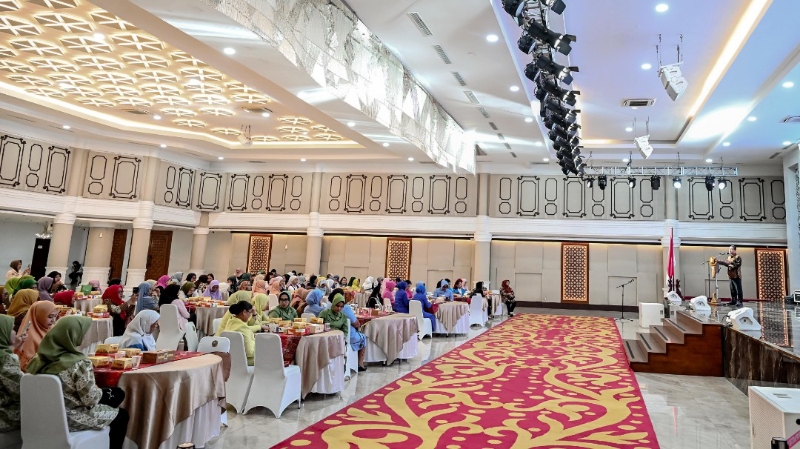
Meanwhile, David Sepriwasa, Acting Director of the Community Participation Development Directorate at Indonesia's Corruption Eradication Commission (KPK), praised the North Sumatra Provincial Government's commitment to supporting corruption prevention efforts.
David said families played a crucial role in shaping people's character and provided the first environment in which children could become familiar with anti-corruption values. Introducing integrity at an early age would give children a foundation for distinguishing between proper conduct and behaviour that contradicted the principles of honesty.He explained that developing an anti-corruption culture did not require major events or complicated programmes. Families could establish these habits through parental example and everyday behaviour that demonstrated integrity.
Children tend to learn from what they see and experience at home. Parents must therefore ensure consistency between their words and actions. Advice about honesty becomes easier for children to understand when they witness honest behaviour in their own families.David emphasised that the KPK encouraged every family to introduce nine core anti-corruption values from an early age. These values are honesty, independence, responsibility, courage, simplicity, care, discipline, fairness and hard work.
"The KPK encourages families to instil the nine core anti-corruption values from an early age. These values include honesty, independence, responsibility, courage, simplicity, care, discipline, fairness and hard work," he said.Consistently applying these nine values is expected not only to strengthen individual character but also to create family environments in which integrity is highly valued. When families practise these principles consistently, society gains a stronger foundation for developing an anti-corruption culture.
Co-operation between the North Sumatra Provincial Government, the KPK, women's organisations and the wider community is therefore an important part of expanding integrity education. The initiative aims to make families the starting point for corruption prevention while nurturing a generation that values honesty, responsibility and the courage to reject wrongdoing. (IDNC)REPORTER: Ahmad Zulfikar | EDITOR: Fik Sagala