Saturday, 07 November 2026
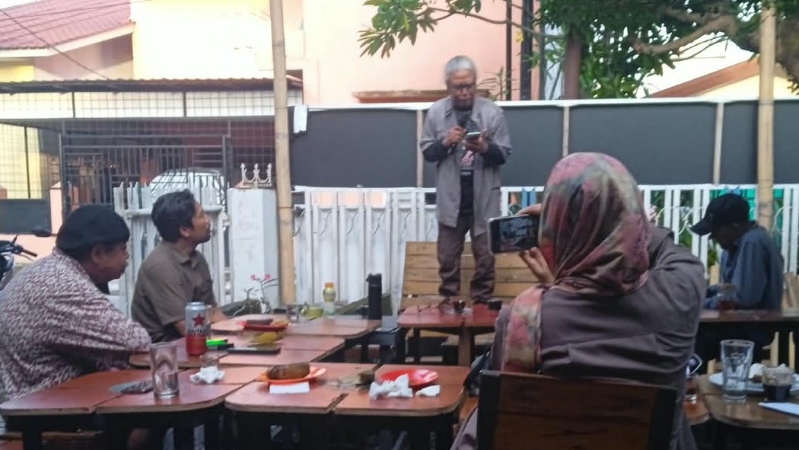
MEDAN | INDATANEWS.COM - National literary figure Saut Situmorang has criticised the dominance of mainstream media in shaping Indonesia's literary canon and advocated digital literature as a means of challenging that influence.
Saut voiced his criticism during a cultural discussion organised by DeliArt Community under the title "Reading the Map of Contemporary Indonesian Literature". The event took place at Sanggar Teater Rumah Mata, Jalan Sei Seguti, Medan, on Friday, 6 November 2026, bringing together artists, writers, students and members of the public.In response to the dominance of mainstream media, most of which operates from Java, Saut has encouraged the development of digital literature. He believes digital platforms can help writers bypass the lengthy waiting process involved in submitting their work to conventional editorial desks.
According to Saut, the public should not accept the literary canon – a collection of works and authors regarded as outstanding in Indonesia – without questioning it critically.He cited Ayu Utami's novel Saman as an example. At the time of its publication, mainstream media hailed the novel as revolutionary "liberating literature" in the post-Reformation era. The work was considered groundbreaking because it challenged taboos in conservative society by openly addressing the female body, sex, infidelity, and protests against religion and the state. The Jakarta Arts Council subsequently awarded the novel its Novel Competition prize.
However, Saut argued that a closer examination of the novel reveals that the physical liberation experienced by its female characters does not necessarily represent genuine liberation for women themselves. Literary critic Katrin Bandel went further, arguing that the female characters in the novel still portray women as exotic objects for male readers to enjoy.

"To fight media hegemony over the canonisation process in Indonesia, we have built digital literature since the era of e-mail to today's social media," Saut said.
He explained that digital literature offers distinctive advantages in the way literary works are presented. Writers can incorporate visual designs and even audio elements, while digital platforms enable faster distribution and allow their work to reach a wider audience.This approach differs from publishing literature in newspapers, where space and publication schedules remain limited.
"I once wrote a rain poem. I designed the display in such a way. The stanzas fell like raindrops, complemented by supporting background sounds," Saut said.He added that advances in modern technology also allow writers to incorporate hyperlinks and various multimedia features available through digital platforms.

In Saut's view, poetry, like any other art form, requires technique, theory, purpose and ideology. It is not simply a matter of expressing personal feelings or pouring out one's thoughts.
The discussion also explored the development of literature in North Sumatra, particularly in Medan. The city once produced prominent literary figures such as Chairil Anwar, Sitor Situmorang and Amir Hamzah. However, its literary scene is now considered to have stagnated, partly because the establishment of the literary canon remains centred on Jakarta.Alongside the discussion, DeliArt Community also organised a poetry reading. Ayub Hamzah Fahreza performed Saut Situmorang's poem entitled "Aku Adalah Mayat" (I Am a Corpse), adding to the enthusiastic atmosphere of the event. (IDNC)
REPORTER: Darmailawati | EDITOR: Fik Sagala