Friday, 04 September 2026

MEDAN | INDATANEWS.COM - The North Sumatra Provincial Inflation Control Team (TPID) has stepped up monitoring of food prices and supplies following a significant increase in broiler chicken prices at several traditional markets. The North Sumatra Provincial Government is taking the measure to ensure food supplies remain secure and staple goods continue to be available to the public at affordable prices.
The price of cut-up chicken reached Rp47,800 per kilogram on Wednesday, August 26, 2026, at several traditional markets in Medan and surrounding areas. The price was significantly above the government-set Reference Purchase Price (HAP).
Dedi Jaminsyah Putra Harahap, head of the North Sumatra Provincial Office of Industry, Trade, Energy and Mineral Resources, said chicken prices at several markets around Medan currently range between Rp43,000 and Rp50,000 per kilogram.
According to Dedi, the increase is primarily driven by stronger consumer demand and rising prices for live broiler chickens at the farm level. Poultry farmers are currently selling live birds at prices ranging from Rp26,500 to Rp28,500 per kilogram.
At the direction of North Sumatra Governor Bobby Nasution, the TPID deployed a joint team on Thursday, August 27, 2026, to check price developments, stock availability and the smooth distribution of essential staple goods and other key commodities (Bapokting) directly at traditional markets in Medan and several other regencies and cities.
The joint team consists of representatives from the Office of Industry, Trade, Energy and Mineral Resources; the Office of Food Security, Food Crops and Horticulture; the Office of Investment and One-Stop Integrated Services; and the Economic Bureau of the North Sumatra Provincial Government Secretariat.
During the monitoring, the team is also coordinating with Bank Indonesia, the Central Statistics Agency (BPS), state-owned logistics company Perum Bulog, the Food Task Force, and regency and city governments. The cross-agency coordination is intended to provide a comprehensive picture of local food supply conditions and price formation.
"The governor's directive is clear: The government must be present and understand the actual situation on the ground. We cannot rely solely on figures in reports. We are checking prices, stock availability, supplies and the entire distribution chain directly in the field. If the price of a commodity rises unusually sharply, the causes must be identified quickly and targeted measures must be taken," Dedi said.
The North Sumatra TPID is not focusing solely on broiler chicken meat. The team is also monitoring several strategic commodities that have a direct impact on inflation and the public's purchasing power.
The monitored commodities include beef, rice, cooking oil, red chilies, bird's eye chilies, broiler eggs, dencis fish or tuna, shallots and tomatoes.
Particular attention, however, is being given to broiler chicken meat, as its price has risen significantly in recent days and is well above the government-set Reference Purchase Price.
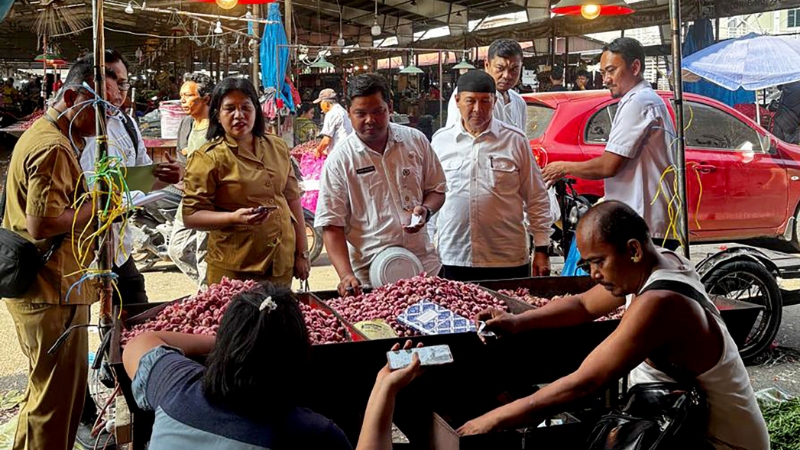
The North Sumatra Provincial Government is currently coordinating with producers, businesses and other stakeholders to examine the entire chicken meat pricing chain. The government is not only looking at prices at the retail level but is tracking price developments from poultry farmers through slaughterhouses and traders to end consumers in the markets.
This step is important to identify the main factors behind the price increase while ensuring that every stage of the distribution chain operates properly. The government also aims to prevent possible cases of withheld stocks, hoarding, distribution disruptions or excessive profit-taking that could place an additional burden on the public.
If the team finds indications of violations, the North Sumatra Provincial Government, together with the Food Task Force and relevant authorities, will conduct further investigations in accordance with applicable regulations.
Dedi emphasized that the government seeks to maintain a balance between consumer interests and business interests while keeping food prices stable.
"The basic principle is the four Ks: affordable prices, adequate supply, smooth distribution and effective communication. We want to ensure that people can obtain staple goods at reasonable prices, farmers and producers receive fair prices, and the distribution chain remains healthy and transparent," he added.
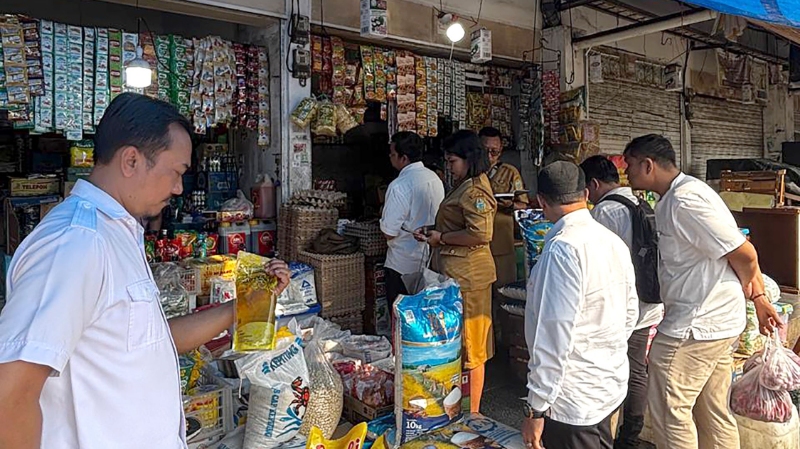
The North Sumatra Provincial Government will strengthen monitoring in Medan and surrounding areas, as the region is one of the province's largest centers for food consumption and distribution.
Food price developments in Medan are closely linked to supplies from various production centers in surrounding regencies as well as shipments from other provinces. Supply disruptions or price changes in production areas can therefore have a direct impact on the prices paid by consumers in Medan.
The North Sumatra Provincial Government has called on regency and city governments to carry out similar monitoring on an ongoing basis. Regional administrations have also been asked to immediately report any sharp price increases or disruptions in food supplies.
All data collected through field monitoring will subsequently be consolidated by the North Sumatra TPID together with Bank Indonesia, BPS, Bulog and relevant authorities. The government will use the combined data as a basis for determining rapid and targeted inflation-control measures.
The monitoring results will also serve as a basis for deciding on appropriate intervention measures. Possible measures include strengthening supplies from production areas, facilitating food transportation, optimizing rice distribution under Bulog's Supply and Food Price Stabilization Program (SPHP), and conducting affordable food programs if further intervention is deemed necessary.
Through these measures, the North Sumatra Provincial Government aims to maintain food price stability while ensuring that the public continues to have access to staple goods at reasonable prices. The government will continue to closely monitor broiler chicken prices to ensure that the current increase does not develop into broader inflationary pressure. (IDNC)
REPORTER: Ahmad Zulfikar | EDITOR: Fik Sagala






 /home/u7391150/public_html/indatanews.com/theme/function.php on line 28