Thursday, 29 October 2026
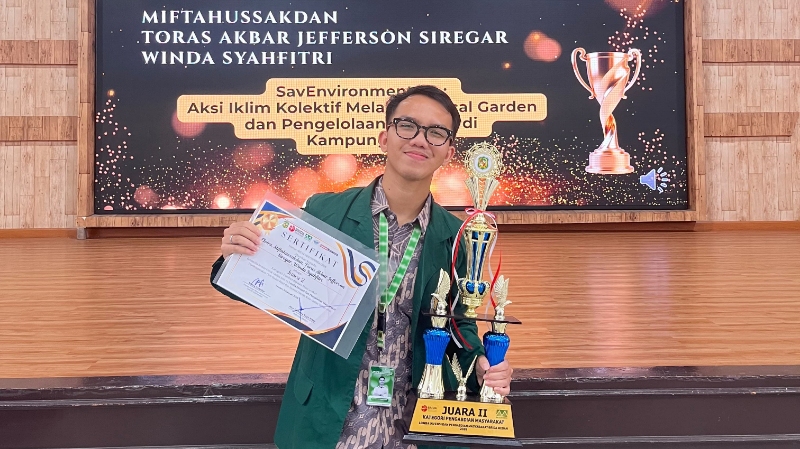
MEDAN | INDATANEWS.COM - Concern for the environment has motivated Sakdan, a student at the Faculty of Public Health (FKM) at the University of North Sumatra (USU), to develop a concept for converting organic waste into biochar. In a scientific paper, he proposes an approach that transforms food waste into a charcoal-like material that could help improve soil quality while supporting carbon storage.
His ideas stem from concerns about climate change, rising carbon emissions and increasing motor vehicle traffic, which also contributes to environmental pollution. Sakdan sees organic waste and rising carbon levels as two interconnected challenges that could be addressed together through innovative approaches.Sakdan has developed the idea of using biochar made from food waste in landscaped central road reservations. The aim is to make productive use of waste that would otherwise often be discarded, while also improving soil conditions around urban trees.
Biochar is a carbon-rich material produced by heating organic matter under conditions of very limited oxygen. It can retain some carbon in a relatively stable form and, depending on the feedstock, production method and properties of the finished material, may offer benefits for soil.Organic waste presents a significant challenge for urban waste management. Food scraps from households, businesses and everyday activities can place additional pressure on waste disposal facilities when they are not managed properly. Under certain conditions, the decomposition of organic waste also releases greenhouse gases, including methane.
Through his biochar concept, Sakdan aims to view waste not simply as material that must be disposed of, but as a resource that can be put to use with the help of appropriate technologies. This approach reflects the principles of the circular economy, which seeks to maximise the use of materials and reduce waste.The proposed use of biochar in landscaped central road reservations also demonstrates how Sakdan hopes to connect waste recovery with the need for urban green spaces. Soil around roadside trees faces various challenges, including restricted rooting space and the effects of traffic. Suitable soil amendments could help improve soil conditions and support plant growth.
However, biochar does not offer the same benefits regardless of the feedstock or production method. The quality of the material, the stability of the stored carbon and its safety must all be assessed before large-scale use can be considered. Further testing is also needed to ensure that biochar made from food waste contains no contaminants that could harm soil or plants.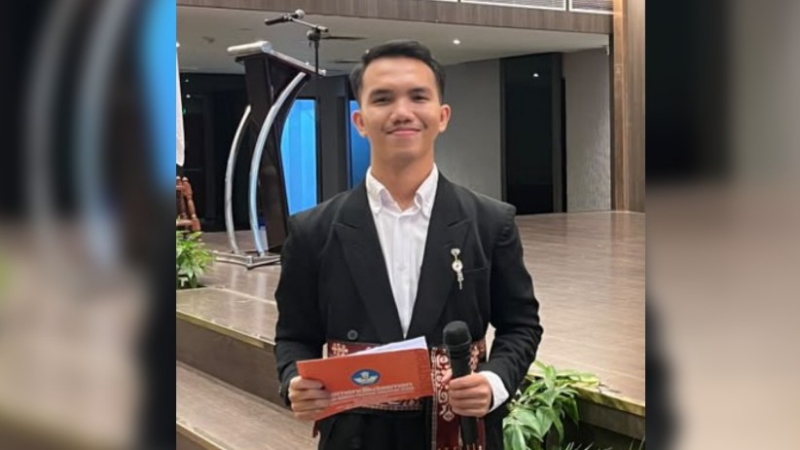
Despite the potential of his idea, Sakdan still faces challenges before it can be developed into a practical product. Biochar production requires a process known as pyrolysis, in which organic material is heated under conditions of very limited oxygen.
Temperature, heating conditions and the characteristics of the feedstock must be carefully controlled to produce material suitable for its intended purpose. Variations in the production process can affect biochar quality, particularly the stability of the stored carbon and its potential benefits for soil.Sakdan explains that producing biochar requires equipment that can be relatively expensive. Alongside financial constraints, the technical requirements present a considerable challenge. As the necessary facilities and equipment are not yet sufficiently available, he has been unable to turn the concept developed in his scientific paper into a product or test it in practice.
These difficulties highlight a challenge frequently encountered by students developing research-based innovations. Ideas that could help address societal problems require additional support, including laboratory facilities, academic supervision, funding and opportunities to test concepts experimentally.Producing biochar from food waste also requires further research into its technical and environmental feasibility. Researchers must compare the potential benefits of carbon storage with the energy consumed during production, assess the material's safety and calculate the costs of practical application. These steps are essential to ensure that the innovation progresses beyond the conceptual stage and can be implemented on a sound scientific basis.
If Sakdan gains access to suitable technical facilities and expert support, his idea could advance to an experimental research phase. Step-by-step investigations could help identify suitable types of organic waste, analyse the properties of the resulting biochar and assess potential applications in soils across urban green spaces.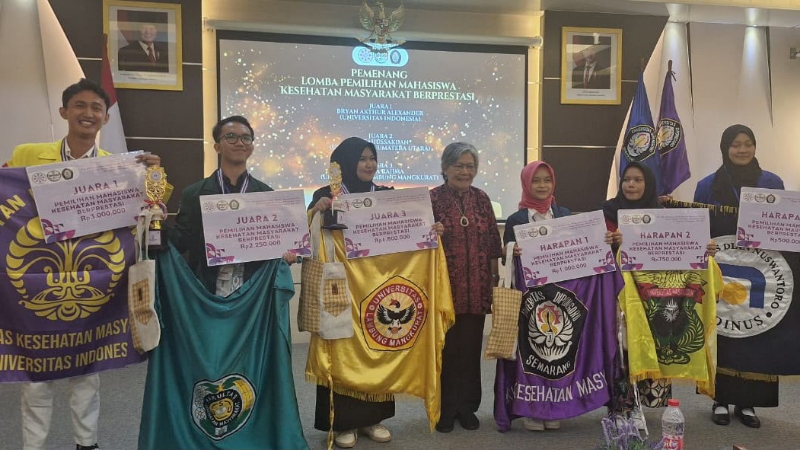
Although Sakdan has yet to produce biochar as a finished product, the idea has already contributed to his academic achievements. His scientific paper on biochar earned him recognition as the top student at USU's Faculty of Public Health. He also secured second place in the university's outstanding student selection and second place nationally in the public health category.
These achievements demonstrate how environmental challenges can inspire students to develop solutions-oriented concepts. Scientific research not only provides a platform for presenting ideas but also creates opportunities to examine their relevance to society's needs.Sakdan's achievements also highlight waste management and carbon emission reduction as important areas for scientific development within public health. Environmental problems are closely linked to human health, including through air and soil quality and the effects of climate change on people's lives.
Alongside developing his biochar concept, Sakdan participated in a research project with academic staff investigating natural larvicides derived from castor seeds and chilli seeds. The study examined the use of natural materials as potential alternatives for controlling larvae.Natural larvicides are relevant to public health because controlling larvae can help prevent diseases transmitted by mosquitoes. However, the effectiveness and safety of natural active ingredients require further investigation. This includes examining appropriate concentrations, effects on target organisms and potential environmental consequences.
Sakdan's involvement in this research demonstrates that his interests extend beyond a single issue. He is also exploring ways to use available resources to address challenges in public health and environmental protection.Ultimately, the idea of producing biochar from food waste illustrates the importance of connecting student creativity, scientific research and societal needs. Transforming waste into useful materials offers opportunities for more sustainable environmental management. However, practical implementation requires scientific evidence and appropriate technical support.
For universities, ideas of this kind also provide opportunities to strengthen collaboration between students, lecturers, laboratories and research partners. Such support can help turn scientific studies into tested prototypes and pave the way for innovations that can be applied more effectively in practice.Through his academic achievements and research experience, Sakdan demonstrates how environmental awareness can develop into a scientific idea. The next challenge is to secure the support needed to move the concept beyond theoretical development so that it can be systematically tested and evaluated in practical conditions. (IDNC)
REPORTER: Ahmad Zulfikar | EDITOR: Fik Sagala