Friday, 27 November 2026
MEDAN | INDATANEWS.COM - The North Sumatra Provincial Government, in coordination with the Indonesian Central Government, is preparing a range of mitigation measures to address the threat of hydrometeorological disasters towards the end of 2026. One of the proposed measures is a Weather Modification Operation (Operasi Modifikasi Cuaca or OMC), aimed at controlling and reducing rainfall intensity in areas vulnerable to flooding and landslides.
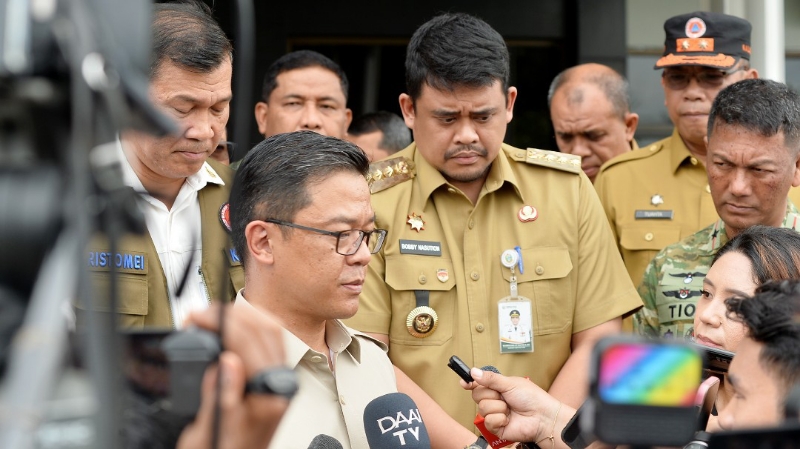
The preparations were discussed at a Coordination Meeting on Hydrometeorological Disaster Preparedness for North Sumatra Province, held at Soewondo Air Force Base on Jalan Imam Bonjol, Medan Polonia, on Monday, 16 November 2026.The meeting was chaired by Coordinating Minister for Human Development and Culture Sugiono. North Sumatra Governor Bobby Nasution, Head of the National Disaster Management Agency (BNPB) Lieutenant General Kristomei Sianturi, and representatives of several relevant institutions also attended.
The coordination meeting provided a platform for central and regional authorities to align their strategies in anticipation of increasingly severe weather conditions towards the end of the year. Officials also reviewed previous disaster response efforts, particularly the impact of Cyclone Senyar, which affected several areas in Aceh and North Sumatra.Hydrometeorological disasters, including flooding, flash floods and landslides, require comprehensive preparedness involving multiple government institutions and sectors. Consequently, central and regional authorities are prioritising early warning information, community preparedness, river infrastructure restoration and the possible implementation of weather modification as part of their mitigation strategy.
North Sumatra Governor Bobby Nasution stressed that all regency and municipal governments across the province had been instructed to ensure that information from the Meteorology, Climatology and Geophysics Agency (BMKG) regarding potential extreme weather conditions reached the public widely, transparently and in an accessible manner.
According to Bobby, regional administrations must ensure that residents receive timely information about weather developments, particularly in areas facing the possibility of heavy rainfall. Communities also need to understand the potential risks and the safety measures they should take if a disaster occurs."Earlier, designated assembly points were identified in case of flooding or landslides. The Coordinating Minister instructed every area at risk of heavy rainfall to make sure that information is properly communicated to the public so that people can remain alert," Bobby said.
In addition to distributing BMKG weather warnings, regional governments must ensure that evacuation locations and community assembly points are ready for use. This is important to help residents identify where to gather if flooding or landslides threaten their neighbourhoods.Regency and municipal administrations are also expected to strengthen communication with relevant government departments, local authorities and disaster management agencies. Such coordination will enable information about changing weather conditions and potential hazards to reach communities more quickly.
Bobby emphasised that preparedness should not stop at distributing warnings. Regional governments must also ensure that residents understand the information they receive and know what action to take to protect themselves and reduce potential risks.
Coordinating Minister for Human Development and Culture Sugiono explained that the meeting focused on evaluating previous disaster response efforts and aligning preparations for potential hydrometeorological disasters towards the end of the year.
The discussions involved regional administrations whose areas had previously been affected by Cyclone Senyar, including the North Sumatra Provincial Government, several regency and municipal administrations across the province, and the Aceh Provincial Government.Sugiono noted that global climate change was also contributing to significant shifts in weather patterns. According to BMKG reports, changes in weather patterns between the islands of Sumatra and Java required particular attention when developing disaster mitigation strategies.
"We are coordinating with regional governments, the North Sumatra Provincial Government and several regencies and municipalities that were affected by Cyclone Senyar, as well as the Aceh Provincial Government. This coordination will serve as a basis for planning preventive and mitigation measures against the impact of hydrometeorological disasters towards the end of the year," Sugiono said.One of the key priorities discussed at the meeting was accelerating river normalisation. The Government considers the substantial sediment deposits left behind by previous flash floods a serious concern because they can reduce rivers' capacity to accommodate and channel water.
Removing sediment and restoring river capacity are therefore essential measures to reduce the risk of flooding, particularly during prolonged periods of heavy rainfall. Authorities need to ensure that rivers can carry water efficiently to prevent it from overflowing into residential neighbourhoods and agricultural areas.Sugiono also revealed that the President of Indonesia had given particular attention to disaster management efforts in Aceh, North Sumatra and West Sumatra. The President had convened several limited Cabinet meetings over the preceding two weeks to review disaster response progress and assess the Government's readiness to address further threats.
This level of attention underlines the importance of coordinated action and practical measures across different levels of government, particularly as rainfall levels could increase towards the end of the year.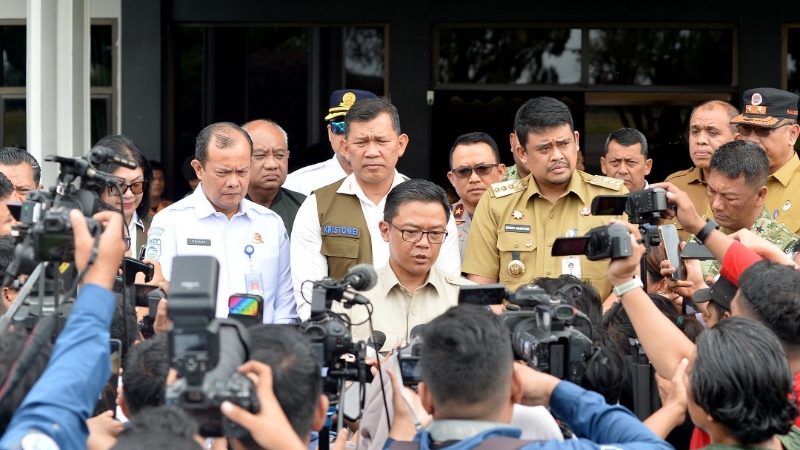
Head of the National Disaster Management Agency (BNPB), Lieutenant General Kristomei Sianturi, said the Central Government was prepared to accommodate requests from regional administrations to conduct Weather Modification Operations as one of the measures to reduce rainfall intensity in disaster-prone areas.
According to Kristomei, the BNPB had already received an official written request from the Governor of Aceh. The agency had also offered a similar operation to the Governor of North Sumatra as part of preparations for potential periods of heavy rainfall."The Governor of Aceh has sent us an official letter requesting a weather modification operation to reduce rainfall intensity in the region. We have also offered the same measure to the Governor of North Sumatra," Kristomei explained.
He stressed that weather modification was not intended to eliminate rainfall altogether. Instead, the technology was designed to influence and reduce rainfall intensity in selected areas to help minimise the risk of flooding and other hydrometeorological disasters.Weather modification is one of several mitigation options that can be considered depending on local requirements and prevailing weather conditions in the targeted areas. Regional administrations can submit their requests to the Central Government through coordination with the BNPB.
Alongside preparations for possible weather modification operations, the BNPB highlighted the importance of aligning disaster preparedness plans between central and regional authorities. Existing disaster risk assessments must also be updated to ensure that mitigation policies reflect changing environmental conditions and potential threats in each area.The involvement of academics and disaster management specialists is another important element in strengthening long-term prevention strategies. Scientific assessments are needed to identify vulnerable locations, map disaster risks and develop more targeted preventive measures.
The Government hopes that combining stronger early warning systems, river normalisation, updated risk assessments, public education and possible weather modification operations will help reduce the impact of hydrometeorological disasters towards the end of the year.Through this coordination, the North Sumatra Provincial Government and the Central Government aim to ensure that disaster preparedness does not focus solely on responding after an emergency has occurred. Instead, greater emphasis will be placed on prevention and mitigation before potential hazards develop into more serious disasters. (IDNC)
REPORTER: Ahmad Zulfikar | EDITOR: Fik Sagala