Saturday, 28 November 2026

MEDAN | INDATANEWS.COM - North Sumatra's Forestry and Environment Agency has confirmed that there are no longer any active hotspots from forest and land fires in the province. However, smoke has spread across the region in recent days, worsening air quality in several areas, including the city of Medan. Smoke carried into North Sumatra by prevailing winds from other regions is considered a possible cause.
The Head of North Sumatra's Forestry and Environment Agency, Heri Wahyudi Marpaung, made the statement during a press conference organised by the North Sumatra Provincial Communication and Informatics Agency at the Governor's Office, Jalan Diponegoro No. 30, Medan, on Friday, 16 October 2026.Heri explained that his agency had detected two fire hotspots in the regencies of Asahan and Samosir around six weeks earlier. Thanks to an early response and cooperation with local communities, the Indonesian National Armed Forces, the Regional Disaster Management Agency, the Manggala Agni firefighting unit and the Forestry and Environment Agency, both fires were successfully extinguished.
"According to today's data from the Indonesian Meteorology, Climatology and Geophysics Agency (BMKG), there are no longer any fire hotspots in North Sumatra. Our region, like Aceh, is relatively safe. However, the smoke reaching our area, which has forced people to start wearing masks again, is being carried by wind currents from other regions," Heri said.The situation demonstrates that even in the absence of new fire hotspots in North Sumatra, residents can still suffer from air pollution caused by forest and land fires elsewhere. Wind currents can carry smoke across administrative boundaries. Addressing the resulting impact therefore requires close cooperation between the affected regions.
According to Heri, forest and land fires across Indonesia are currently concentrated mainly in peatland areas. Regions facing this problem include Kalimantan, South Sumatra, Jambi, Lampung and Riau.
Extreme weather conditions that dry out peat soils further increase the risk of fires. They also make firefighting more difficult, as flames can spread through deeper peat layers beneath the ground, producing dense plumes of smoke.Peatlands have different ecological characteristics from ordinary forest areas. The ability of peat soil to retain water plays a vital role in maintaining ecosystem moisture and reducing the risk of fire. When both the surface and deeper layers dry out, the organic material contained in the soil becomes more susceptible to ignition.
The consequences threaten not only environmental conservation but also people's daily lives, potentially worsening air quality in areas far removed from the actual fires. Preventing peatland fires therefore requires targeted water management, continuous monitoring of soil conditions and long-term preparedness.
Against this backdrop, North Sumatra's Forestry and Environment Agency has welcomed the central government's initiative to establish a dedicated body to protect and restore mangrove and peatland ecosystems.
Heri believes the establishment of such an agency is an important step because peatland ecosystems require a different approach from production forests and protected forests. The government must maintain the hydrological conditions of peatlands to keep them moist and less vulnerable to fire."Peatlands must remain permanently moist and well supplied with water. When they dry out, the risk of fire rises considerably and dense smoke is produced. These fires cannot be tackled using the same methods applied to ordinary forests on mineral soil," he stressed.
Sustainable peatland management is also an important part of ecosystem conservation and efforts to reduce the risk of environmental disasters. Beyond extinguishing fires that have already broken out, the government must strengthen preventive measures. These should include monitoring vulnerable areas, restoring degraded land and involving local communities in environmental protection.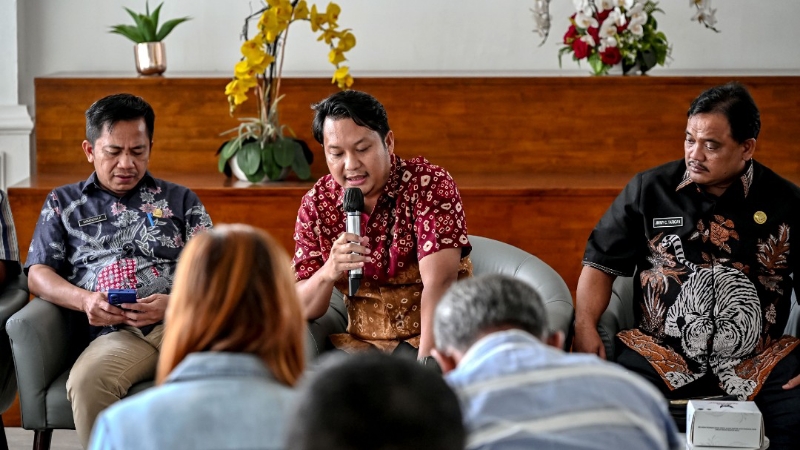
As an immediate protective measure, the North Sumatra Provincial Government continues to distribute masks to people affected by the smoke. It is also coordinating weather modification operations intended to induce artificial rainfall in the worst-affected areas.
These measures are intended to reduce the impact of smoke pollution and protect the public from health risks associated with deteriorating air quality. Their effectiveness, however, continues to depend on atmospheric conditions, available resources and the development of fires in the regions from which the smoke originates.North Sumatra's Forestry and Environment Agency has also urged residents to refrain from burning vegetation when clearing or preparing land. This practice can trigger fires that are difficult to control, particularly during dry weather and strong winds.
Heri emphasised the importance of cooperation among all sections of society in preventing forest and land fires. Public vigilance, support from firefighting teams and coordination between government agencies are crucial to keeping North Sumatra free from fire hotspots.The regional government must also continuously monitor air quality and provide the public with reliable information. This will enable residents to take appropriate protective measures if smoke again spreads across residential areas.
Although the fire hotspots in North Sumatra have now been extinguished, this does not mean the danger posed by smoke has completely passed. Smoke carried in from other regions can continue to affect air quality. Fire prevention, environmental monitoring and public health protection must therefore remain consistent priorities. (IDNC)REPORTER: Ahmad Zulfikar | EDITOR: Fik Sagala